
To combine ingredients from several recipes into one grocery list, scale each recipe first, standardize the ingredient names, convert only compatible units, add the amounts, subtract what you already have, and round the result to packages you can actually buy. Keep different forms separate when they are not interchangeable: fresh tomatoes are not the same line as canned tomatoes, and one bunch of parsley is not automatically equal to one cup of chopped parsley.
The easiest tool is a scratch sheet with six columns: ingredient, amount, unit, preparation or form, recipe, and scaled servings. Do the arithmetic there. Turn it into a store-ready list only after the totals make sense.
Why copying every recipe into one list fails
Most messy lists have three different problems hiding inside them.
First, the same ingredient appears under different names: “onion,” “yellow onion,” and “1 medium onion, diced.” Second, amounts use units that cannot be added directly: grams, cups, cans, bunches, and pieces. Third, the amount used in a recipe may not match the unit sold in a store. A recipe can need 500 grams of trimmed carrots, while the shop sells whole carrots by the bag.
Treat merging as a small data-cleaning task, not as copy and paste. The goal is not to erase useful detail. It is to decide which lines describe the same thing and which differences still matter when you cook or shop.
Start with a complete source sheet
Scale every recipe before you total anything
Write the intended servings beside each recipe. If a four-serving soup must feed six, multiply every scalable ingredient by 1.5 before combining it with the others. Do not add the original recipe amounts and try to adjust the grand total later; that makes it easy to forget one ingredient.
Some items do not scale perfectly. “Salt to taste,” one garnish, oil for greasing a pan, or water for boiling pasta may need a note instead of exact multiplication. Keep those as separate check items until you review the cooking method.
Preserve the original wording in a notes column
Do not delete “divided,” “for serving,” “drained,” “packed,” or “plus more for the pan.” Those words may change the amount you need. Record a clean shopping name in one column and keep the recipe wording in another.
A useful source row looks like this: “chickpeas | 2 | 400 g cans | canned, drained | stew | 4 servings.” That is much safer than reducing it immediately to “chickpeas: 800 g,” because the can size and drained form may affect the final purchase.
Normalize ingredient names without merging the wrong foods
Use one canonical name for true duplicates
Choose a simple name you would recognize in the store. Merge “garlic clove,” “cloves of garlic,” and “garlic, minced” under garlic while preserving the total number of cloves and any preparation note.
Apply the same rule to spelling and harmless descriptors. “Extra-virgin olive oil” and “olive oil” can share a line if either one works for all the recipes. If one recipe specifically depends on a finishing oil, keep it separate.
Keep form, variety, and state when they change the result
Do not merge these automatically:
fresh, canned, sun-dried, and puréed tomatoes;
dry beans and canned beans;
whole leaves and ground herbs;
salted and unsalted butter in precise baking;
plain yogurt and sweetened flavored yogurt;
a red onion needed raw and yellow onions intended for a long-cooked soup.
You can still place related lines next to each other in the produce or pantry section. The test is practical: could one purchased item satisfy every recipe without changing the intended dish? If not, keep two lines.
Convert units only within the same kind of measurement
Add mass to mass, volume to volume, and count to count
Convert grams to kilograms or ounces to pounds, then add. Convert teaspoons to tablespoons or milliliters, then add. Combine eggs, lemons, cans, or bunches as counts when the recipes use comparable sizes.
NIST defines mass and volume as different quantities and lists their units separately. It also confirms that 1,000 milliliters equal 1 liter. That makes 250 mL plus 0.5 L a clean volume conversion, while 250 mL plus 300 g is not a valid sum without ingredient-specific density information. See the official NIST explanations for volume and mass.
Do not use one universal cups-to-grams conversion
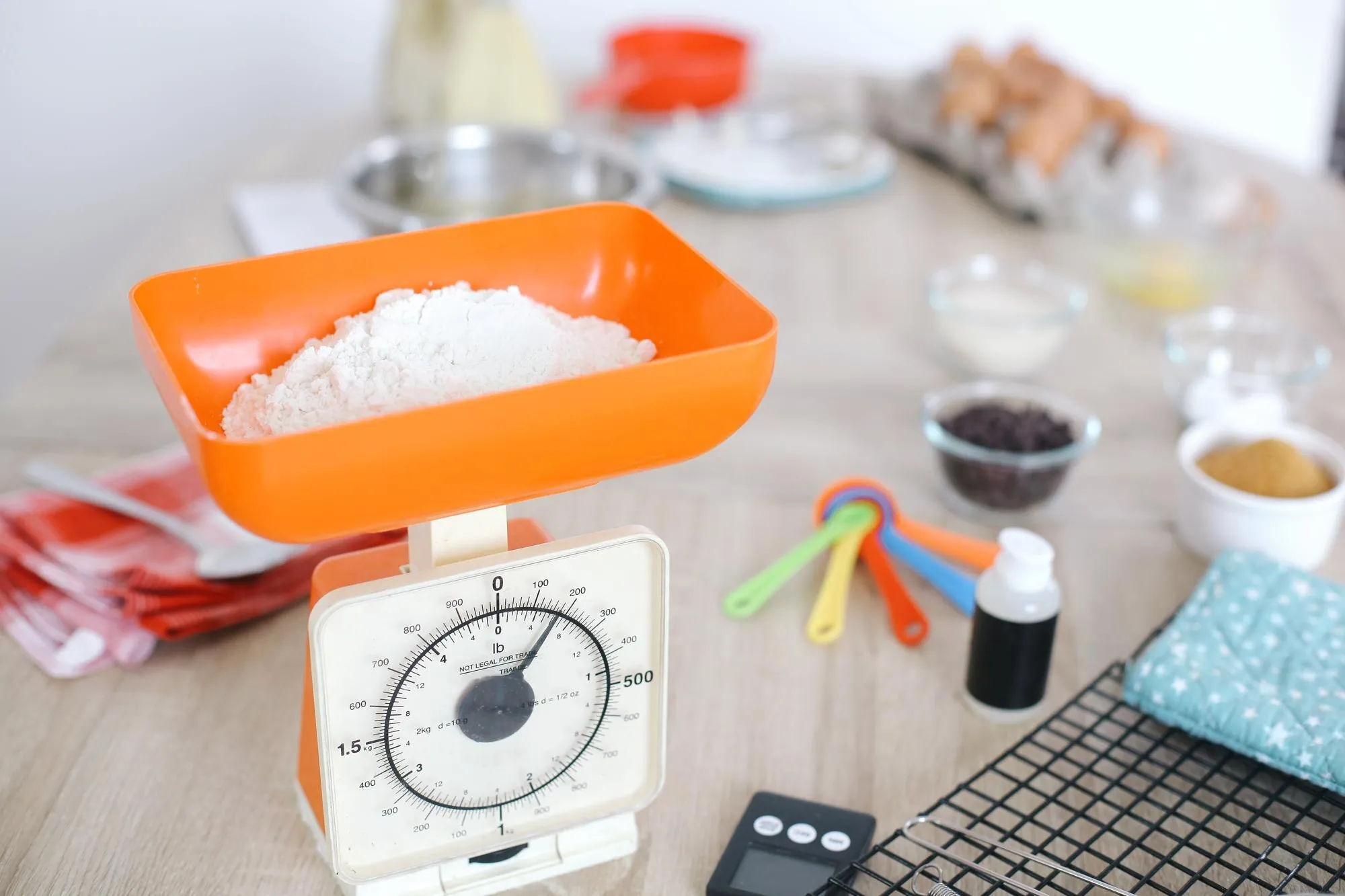
A cup measures volume; a gram measures mass. The relationship changes with the ingredient and even with how it is packed or prepared. King Arthur Baking's ingredient weight chart, for example, gives different gram weights for a cup of flour, sliced almonds, applesauce, and many other foods.
Use a conversion supplied by the recipe author or a trusted ingredient-specific table. Otherwise keep the lines separate and buy a conservative amount. Never assume a cup of chopped vegetables weighs the same as a cup of sugar, flour, oil, or whole vegetables.
Add the totals, then translate them into purchase units
Sum before rounding
Keep useful precision while combining. If three recipes need 115 mL, 180 mL, and 90 mL of oil, total 385 mL first. Do not round each row to a half bottle, because repeated rounding can inflate the list.
For counts, decide whether size matters. Four “medium” onions plus two unspecified onions may reasonably become six medium onions for a flexible stew-and-pasta plan. A large egg and a small egg are not necessarily interchangeable in precision baking, so follow the recipe rather than forcing one total.
Convert the cooking total into something sold in the store
Only after totaling should you choose packages. If you need 797 g of canned tomatoes and your store sells 400 g cans, the practical list is two cans. If you need 1.2 kg of potatoes and bags are 1 kg or 2 kg, choose based on whether the extra amount has a planned use.
The USDA Food Buying Guide distinguishes the food “as purchased,” its purchase unit, and the edible portion or yield. Its examples show why a whole, untrimmed item may not provide the same usable amount as a ready-to-cook version. The guide is designed for institutional food service, but the underlying question is useful at home too: are you totaling what the recipe uses, or what you must buy? Read the USDA's Food Buying Guide overview.
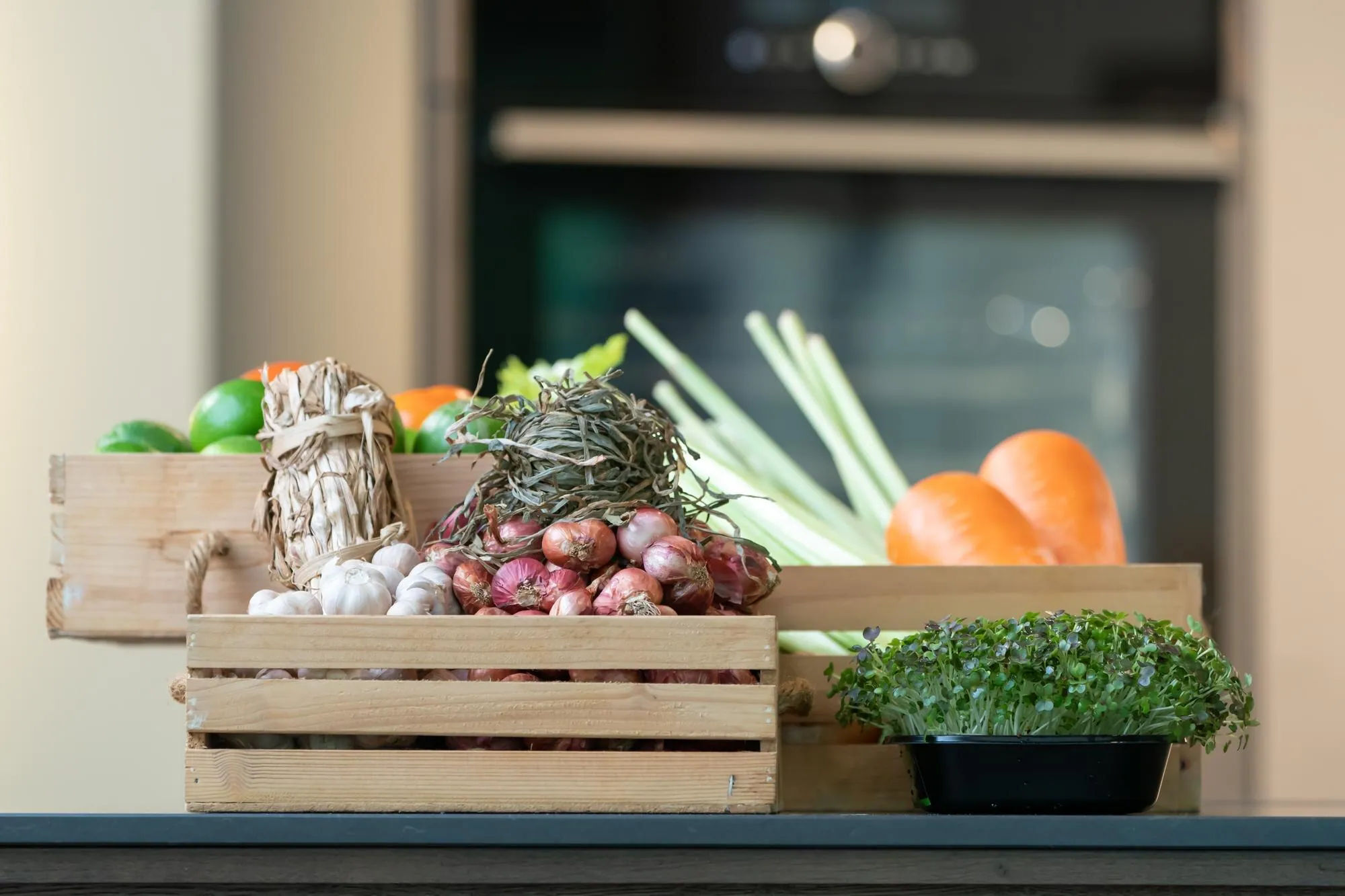
Worked example: merge three dinner recipes
Imagine three recipes with these scaled amounts:
Pasta: 15 mL olive oil, 1 yellow onion, 2 garlic cloves, 400 g canned tomatoes, and 300 g pasta.
Chickpea stew: 10 mL olive oil, 2 yellow onions, 3 garlic cloves, one 14 oz can of chopped tomatoes, and two 400 g cans of chickpeas.
Tray bake: 30 mL olive oil, 1 red onion, 4 garlic cloves, 500 g carrots, and 1 lemon.
Normalize “chopped tomatoes” and “canned tomatoes” because both recipes accept the same canned product. Convert the 14 oz can using a verified unit converter; it is about 397 g. Now add compatible lines:
olive oil: 55 mL;
yellow onions: 3;
red onion: 1;
garlic: 9 cloves;
canned tomatoes: about 797 g, purchased as two 400 g cans;
chickpeas: two 400 g cans;
pasta: 300 g;
carrots: 500 g;
lemon: 1.
The onions remain two lines because the red onion has a distinct role. The tomato total is rounded only when it becomes a purchase. Oil stays in milliliters until you check the bottle at home. This is a short list, but every line is traceable to a recipe.
Subtract what you already have and make the list shop-ready
Check usable stock, not just whether an item exists
Look in the refrigerator, freezer, pantry, and spice shelf after totaling. The USDA MyPlate planning guidance also recommends checking foods on hand while planning meals and making a grocery list. Its weekly planning page includes a grocery-list template and pantry/freezer reminders.
Record the usable amount. A nearly empty oil bottle is not the same as enough oil; an unopened bag of rice may cover the week. For perishable ingredients, confirm that they are still suitable and that the required quantity will remain available after other planned meals.
Group the final list by the way you shop
Arrange the result into produce, bakery, meat or alternatives, dairy, frozen, cans and jars, dry goods, and household items. Keep the quantity at the front: “2 × 400 g cans tomatoes” is easier to verify than “tomatoes — maybe two.” Put optional garnishes and substitutions in a separate section so they do not look mandatory.
How Dishday can support the same workflow
Dishday's current App Store listing says the app can organize a weekly meal plan and build a grocery list from selected meals, sorted by supermarket aisle. That can remove repeated copying once the recipes and servings are correct. Use the meal planner to choose the meals, then review the combined result in the grocery-list feature.
Automation still needs judgment. Check unusual units, recipe scaling, package sizes, pantry stock, allergens, and meaningful distinctions such as fresh versus canned. The related guide on making a grocery list from a weekly meal plan covers the planning step; this article focuses on the arithmetic and cleanup after multiple recipes have been chosen.
Run a two-minute final check
Before leaving for the store, ask:
Did I scale every recipe to the servings I will actually cook?
Did I merge only ingredients that are genuinely interchangeable?
Did I add only compatible units?
Did I preserve “drained,” “divided,” “for serving,” and other meaningful notes?
Did I convert recipe totals into packages available at my store?
Did I subtract enough usable stock, not merely items I remember seeing?
Does every leftover package have a likely use?
If the final point is unclear, adjust a package, substitute another ingredient, or choose a second recipe that uses the excess. The next guide on planning meals without overbuying groceries can help with that decision.
Frequently asked questions
How do I add ingredients from different recipes?
Scale each recipe first, give true duplicates one standard name, convert compatible units, and then add. Keep different forms or varieties separate when one purchase cannot satisfy every recipe.
Can I combine cups and grams in one grocery total?
Not directly. Cups measure volume and grams measure mass. Use a reliable conversion for the specific ingredient or leave the amounts separate. A universal cups-to-grams rule will be wrong for many foods.
Should I round ingredient amounts up or down?
Add the unrounded recipe amounts first. Then choose a practical package that covers the total. Round up when buying too little would prevent the recipes from working, but plan how to use the extra instead of automatically buying the largest size.
How do I combine onions, garlic, and other items counted by piece?
Add them as counts when the expected sizes and forms are compatible. Keep separate lines when size, variety, or preparation matters, such as red onion for a raw salad and yellow onion for a cooked soup.
What should I do with “salt to taste” or oil for the pan?
Keep it as a pantry check rather than inventing an exact amount. Confirm that you have a reasonable supply. If you are nearly out, add one normal package to the list.
Make one source sheet for this week's recipes and merge it before you shop. If you want the selected meals and reviewed list in one place, download Dishday on the App Store.