
The easiest office lunch for a group is not one ambitious dish. It is a format with a clear headcount, a vegetarian option, a way to label allergens, and food that can be served without a last-minute scramble. Start by choosing the format, then make one short preference check and build a small menu around it.
Start with four decisions, not recipes
A group lunch succeeds when the decision is simple enough for the organiser and considerate enough for everyone eating. The goal is not perfection; it is a clear, usable meal.
Count people and timing
Ask who is definitely eating, the serving time, and whether the lunch is a working meeting or a real break. A headcount of 12 is more useful than a vague ‘small team’; it tells you whether individual boxes, trays, or a shared spread will travel best.
Ask only useful preference questions
Use a short message: vegetarian or vegan, major allergens, religious restrictions, and whether anyone needs a separate portion. Do not ask people to disclose medical details. Confirm ingredients with the provider or package labels instead of guessing.
Set one budget and one owner
Decide a per-person ceiling before browsing menus. One person should confirm the order, delivery window, plates, and leftovers plan. Shared responsibility often means no responsibility when food arrives.
Choose the serving setup
Check the actual room: tables, refrigerator space, microwave, sink, utensils, and time. A beautiful hot buffet is a poor choice if it will sit in a warm meeting room for an hour.

Choose a format that fits the room
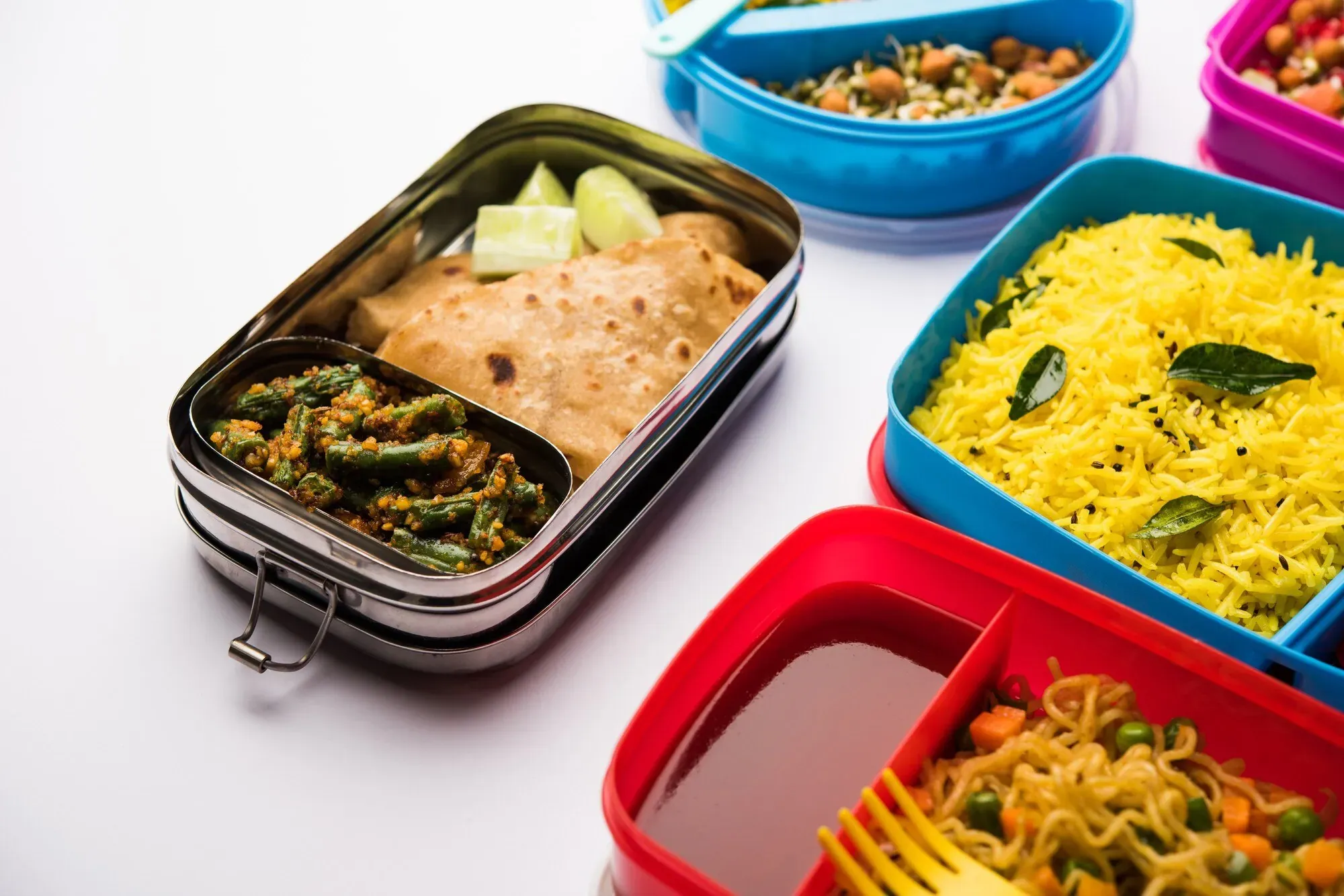
Individual boxes
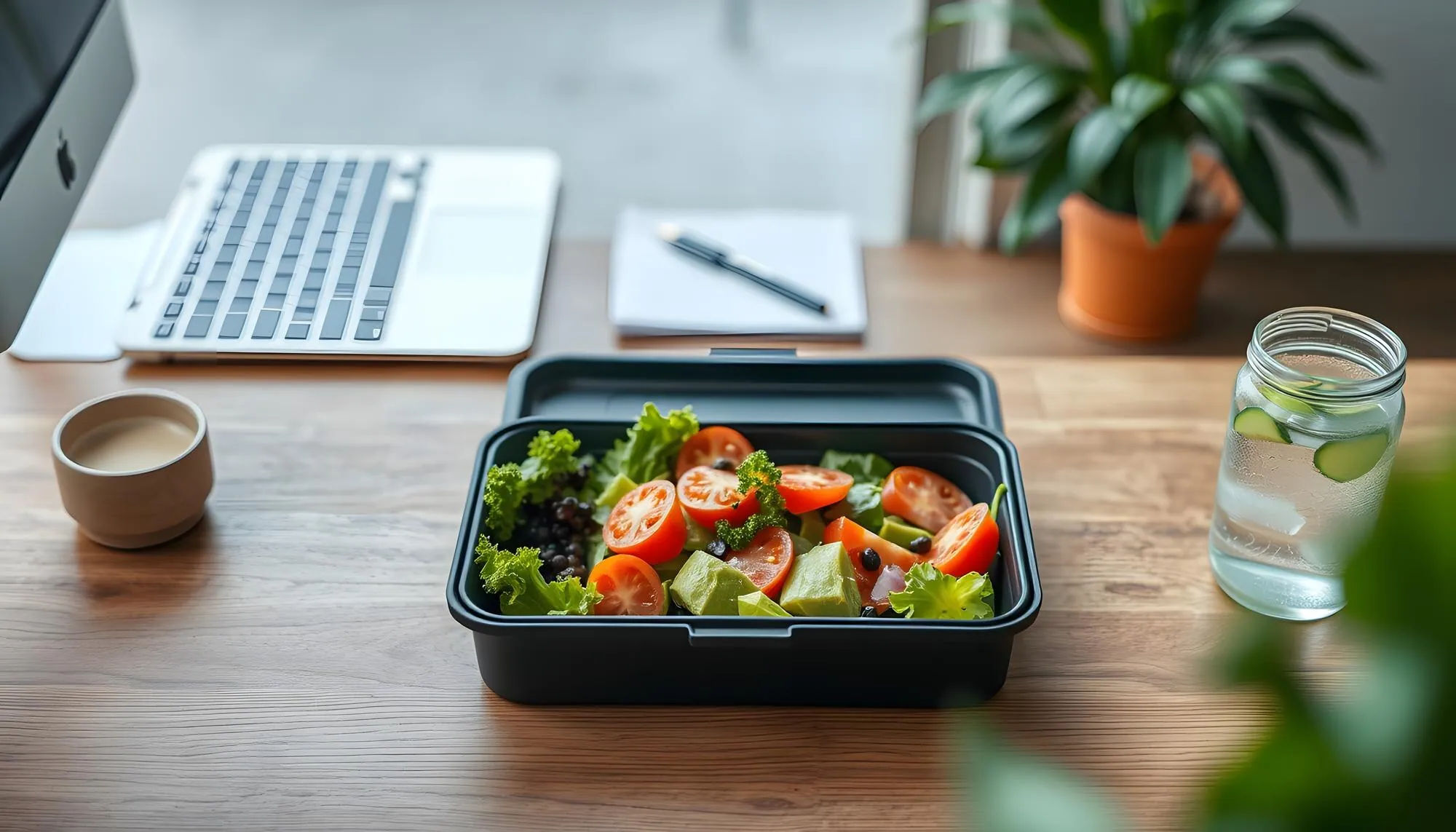
Best when the meeting is short, dietary needs vary, or people will eat at desks. Give each person a main item, fruit or vegetables, and a labeled sauce; it reduces queues and accidental mix-ups.
Build-your-own bowls or wraps
Choose a base, two proteins including a plant option, vegetables, and sauces served separately. This feels flexible without creating six separate menus, and people can avoid ingredients themselves.
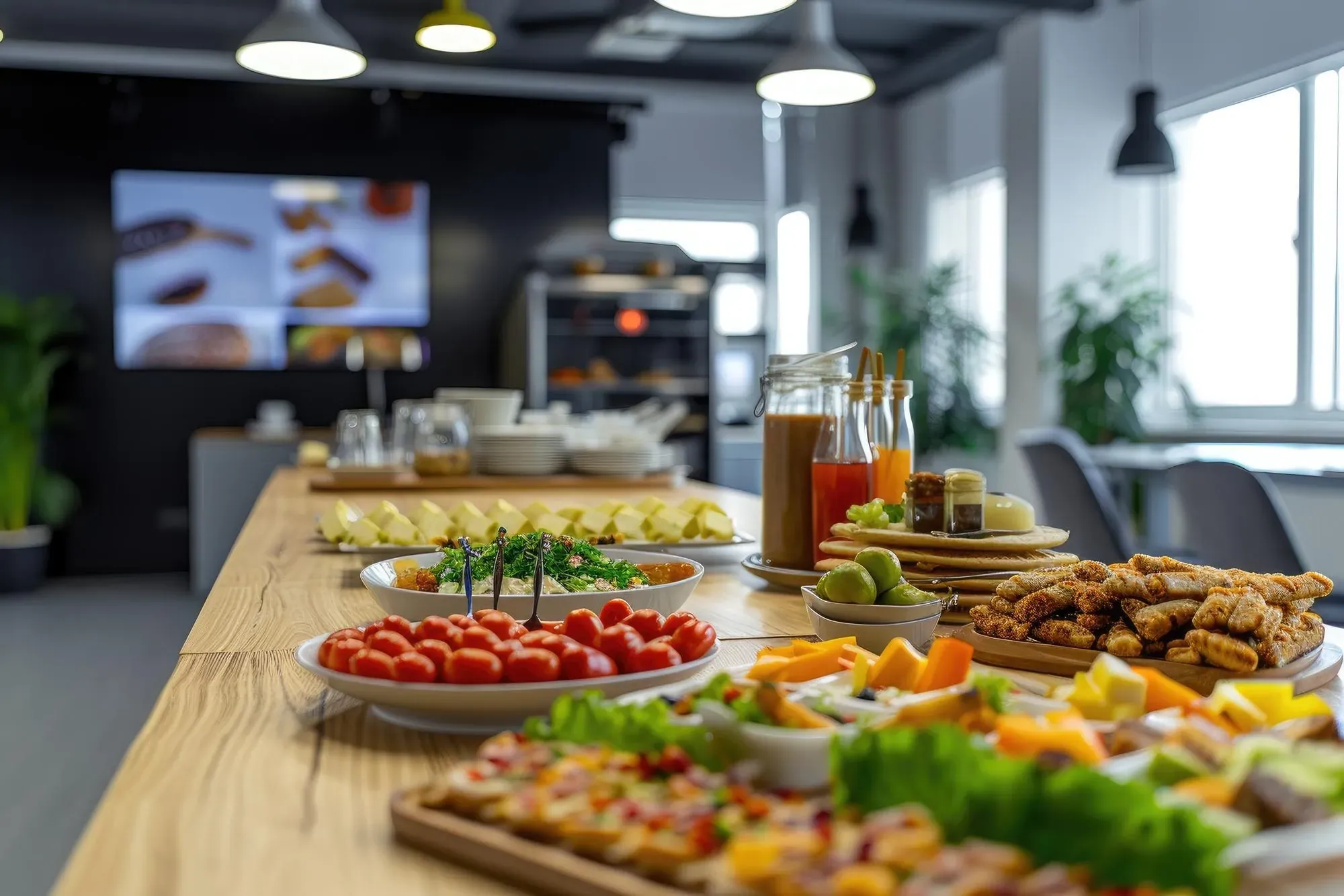
Shared cold spread
Sandwich platters, salads, fruit, hummus, bread, and crunchy vegetables work when there is little equipment. Keep dressings and wet toppings separate until serving so the spread stays appealing.
Catered hot lunch
Use it when the delivery time, serving equipment, and temperature plan are reliable. Ask for labeled vegetarian portions and keep a modest cold backup, especially for a long meeting.
Six office lunch ideas for a group
1. Taco or burrito bowl bar
Use this as a flexible template rather than a fixed recipe. Keep the core familiar, make the plant-based version satisfying, and put sauces or crunchy toppings aside so each person can assemble a portion that works. For a group, repetition and clear labels are more valuable than a complicated choice.
2. Wrap platter with a labeled vegetarian tray
Use this as a flexible template rather than a fixed recipe. Keep the core familiar, make the plant-based version satisfying, and put sauces or crunchy toppings aside so each person can assemble a portion that works. For a group, repetition and clear labels are more valuable than a complicated choice.
3. Pasta salad, green salad, and bread with separate dressing
Use this as a flexible template rather than a fixed recipe. Keep the core familiar, make the plant-based version satisfying, and put sauces or crunchy toppings aside so each person can assemble a portion that works. For a group, repetition and clear labels are more valuable than a complicated choice.
4. Soup or chili with toppings, bread, and fruit
Use this as a flexible template rather than a fixed recipe. Keep the core familiar, make the plant-based version satisfying, and put sauces or crunchy toppings aside so each person can assemble a portion that works. For a group, repetition and clear labels are more valuable than a complicated choice.
5. Mediterranean-style spread with hummus, grains, vegetables, and pita
Use this as a flexible template rather than a fixed recipe. Keep the core familiar, make the plant-based version satisfying, and put sauces or crunchy toppings aside so each person can assemble a portion that works. For a group, repetition and clear labels are more valuable than a complicated choice.
6. Sandwich boxes plus a fruit and snack option
Use this as a flexible template rather than a fixed recipe. Keep the core familiar, make the plant-based version satisfying, and put sauces or crunchy toppings aside so each person can assemble a portion that works. For a group, repetition and clear labels are more valuable than a complicated choice.
A simple quantity and shopping method
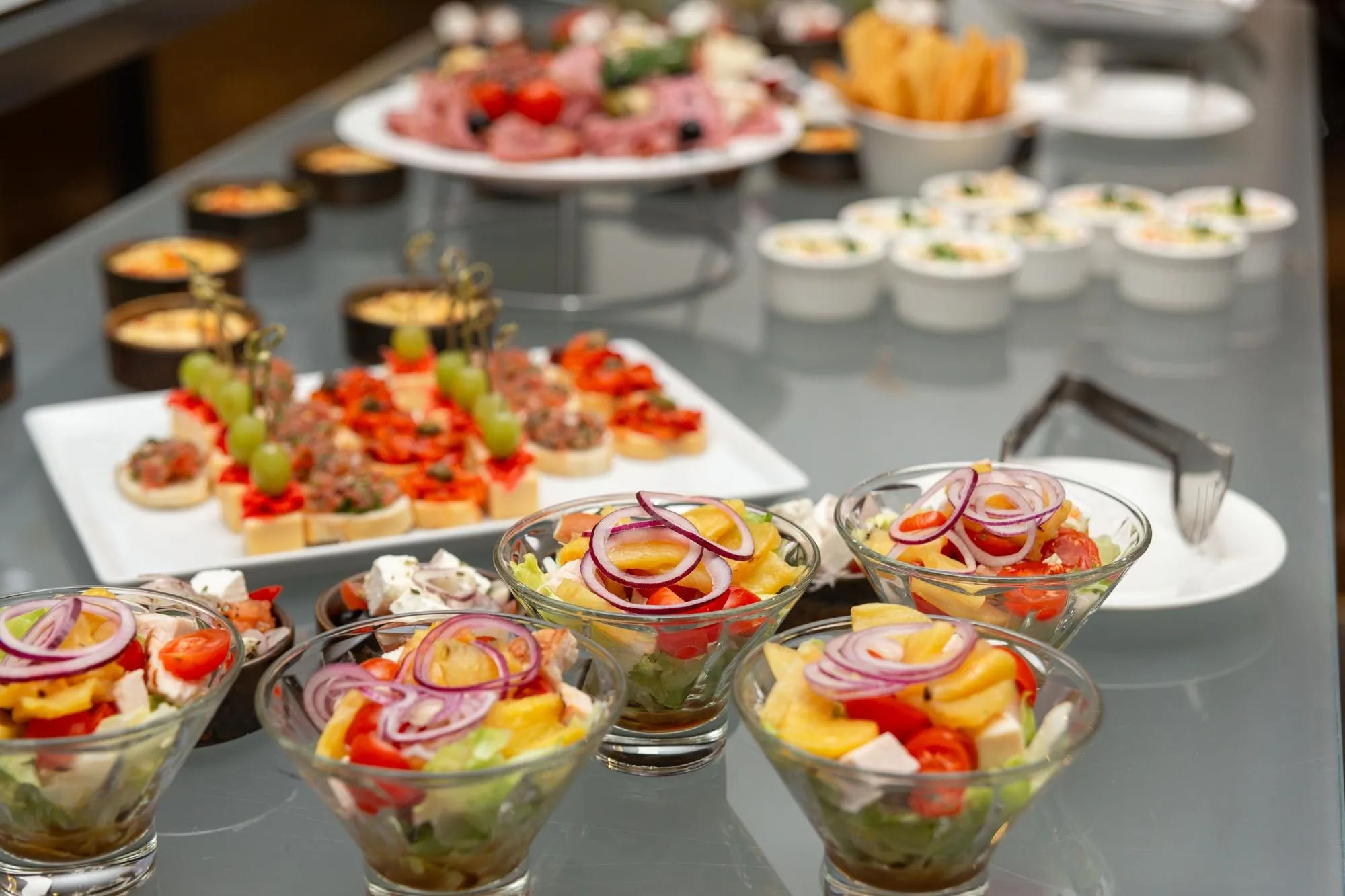
Build the order in this order: confirmed headcount, one primary format, one satisfying plant option, a simple side, and a drink plan. Then check portions with the caterer or packages. If attendance is uncertain, a small flexible buffer is more useful than doubling every item. Keep one written order sheet with quantity, dietary label, delivery time, serving tools, and who will receive it.
For a casual team of ten, for example, individual boxes may be simpler than ten separate choices: select two mains plus a vegetarian main, a fruit or vegetable side, and water. For a longer social lunch, a bowl bar or cold spread gives more conversation and less packaging. The right option is the one your room can serve safely and your team can eat comfortably.
Keep group lunch safe and inclusive
Perishable food needs a real time-and-temperature plan. Arrange delivery close to serving, keep cold foods cold, follow the caterer’s instructions for hot foods, and return leftovers to refrigeration promptly. If there is uncertainty about an ingredient or allergen, label it as unknown rather than assuring someone it is safe. Workplace rules and an individual’s needs come first.
Turn a one-off lunch into a repeatable plan
For recurring team lunches, save the formats that worked in the Dishday meal planner, assign them to a date, and turn the ingredients into one grocery list. The broader office lunch guide is useful for everyday individual lunches; this guide is for the group decision. Dishday can organize recipes and shopping, but it does not verify allergens, supplier labels, or food temperature.
Frequently asked questions
What is the easiest lunch for a group at work?
Individual boxes or a build-your-own bowl setup are usually easiest because portions, dietary choices, and cleanup are clearer.
How much food should I order for an office lunch?
Start with the confirmed headcount, include a small buffer only when attendance is uncertain, and ask the caterer how its trays are portioned. Do not rely on a generic serving count alone.
How do I handle dietary needs without making a huge menu?
Offer one satisfying plant-based main, keep sauces and toppings separate, label ingredients, and arrange clearly separate portions when needed.
Can I serve food family style in an office?
Yes, if the table, utensils, timing, and temperature control make it practical. Individual boxes are safer when people arrive at different times or restrictions are complex.
Plan the next group lunch with less effort
Pick one format, send the four-question check today, and make the list only after replies arrive. A simple lunch people can actually eat is more successful than a complicated menu.
Download Dishday on the App Store to keep the next plan and list together.