
A useful family dinner rotation is a short, reusable list of meals arranged around your real week, not a rigid calendar you must obey forever. Start with 12 to 16 dinners your household already eats, spread them across four weeks, and leave one or two flex nights in every week. Repeat the framework, not every detail: taco night can become beans one cycle and chicken the next, while a pasta slot can change sauce or vegetables.
The goal is to stop rebuilding dinner from zero each evening. A rotation should reduce decisions, reuse groceries and still make room for changing schedules, preferences and leftovers. If the plan creates more work than choosing dinner spontaneously, it is too complicated.
Start with your dinner inventory, not a blank calendar
Write down meals that have worked during the last two or three months. Do not begin with recipes you hope everyone will love someday. Include ordinary options: soup and bread, eggs and vegetables, pasta, baked potatoes, rice bowls, sandwiches, a tray bake, or a store-bought shortcut paired with something fresh.
Beside each meal, note four facts:
Active time: how long someone must actually chop, stir or supervise.
Total time: whether it can fit between arriving home and eating.
Effort level: assembly, quick cooking, or a longer project.
Household fit: everyone eats it, it needs an easy variation, or it is better for adults only.
Keep meals that are dependable even if they look too simple for a formal menu. A rotation succeeds because it works on tired Tuesdays, not because every line would impress a guest.
The USDA's MyPlate meal-planning guidance recommends checking the refrigerator, freezer and cupboards, writing meals down, considering foods the family enjoys, and matching longer recipes to days with more time. Those are useful planning checks; they are not a personalized nutrition prescription.
Define the rules your rotation must survive
Before assigning meals, write the constraints that regularly change dinner. Examples include a late workday, an evening activity, one person eating earlier, limited oven access, a tight grocery day, or a household member who cannot eat a particular ingredient.
Turn each constraint into a planning rule. “Wednesday is busy” becomes “Wednesday dinner needs under 15 minutes of active work.” “One child dislikes mixed dishes” becomes “At least two nights use separate components.” “Friday plans change” becomes “Friday stays flexible.”
Use no more than five rules. Too many conditions create another puzzle. When rules conflict, protect time, safety and dietary needs first; variety can come from toppings, sides and seasonings.
Build a four-week rotation in five passes
Do not try to perfect one week at a time. Lay out four weeks and make five quick passes across the whole cycle.
Pass 1: mark fixed and flex nights
Mark nights when cooking time is predictably short, nights with more room, and nights that should remain open. Flex does not mean failure. It can absorb takeout, dinner with friends, a delayed event, safe leftovers or a meal that moved from another day.
Most households need fewer planned dinners than calendar nights. Start with four or five planned dinners per week. A full seven-night grid often leaves no place for reality.
Pass 2: add broad meal anchors
Give each planned night a broad job, not a narrow recipe: quick pan meal, soup or stew, pasta or noodles, oven meal, build-your-own dinner, leftovers, or freezer backup. Anchors distribute effort and cooking methods before you choose exact food.
Themes are optional. If “taco Tuesday” helps, use it. If it feels repetitive, use a wider label such as “build-your-own night,” which can mean tacos, rice bowls, flatbreads or baked potatoes.
Pass 3: place proven meals before new ones
Fill about three quarters of the slots with dinners from your inventory. Use the remaining quarter for a new recipe, a seasonal change or a meal that only some people want. Familiar meals carry the schedule; experiments should not dominate the busiest week.
Avoid repeating the same main ingredient or cooking method on consecutive nights unless that is intentional. Pasta followed by noodles may feel more repetitive than pasta followed by a tray bake, even if the sauces differ.
Pass 4: create fallback pairs
Give every higher-effort dinner a simpler partner. A roast can fall back to omelets; homemade pizza can become flatbread or sandwiches; a complicated curry can become quick lentils with rice. Keep the fallback ingredients on hand only when they are genuinely reusable.
Pass 5: check the grocery overlap
Circle ingredients used in more than one meal. Plan delicate produce earlier and sturdy or frozen ingredients later. If one recipe introduces six single-use items, decide whether the meal is worth the shopping complexity.
Use themes without making every week identical
A theme should reduce choices while leaving room to adapt. “Soup night” can rotate among tomato soup, lentil soup and a broth-based vegetable soup. “Sheet-pan night” can change the protein, vegetables or seasoning. “Breakfast for dinner” might mean eggs one month and savory pancakes another.
Use a three-level variation system:
Keep the format stable: bowl, tray bake, soup, pasta or build-your-own.
Change one main element: beans instead of chicken, rice instead of noodles, or seasonal vegetables instead of the usual mix.
Change one finishing element: sauce, herbs, cheese, pickles, seeds or a crunchy topping.
Changing everything defeats the point of a rotation. Changing one or two elements makes a familiar dinner feel different without creating a new project.
Make one dinner work for different preferences
Planning a separate meal for every person is rarely sustainable. Look for shared bases and optional branches.
Build one base, then branch late
Cook a neutral base such as rice, pasta, baked potatoes, tortillas, soup or a tray of vegetables. Add strong sauces, cheese, herbs or spicy toppings at the table. Keep one component separate when someone needs it plain or must avoid an ingredient.
This approach is most useful for preference differences. For allergies, intolerances or medically required diets, prevent cross-contact and follow the person's specific safety guidance; simply serving components in separate bowls may not be enough.
Give each person a few dependable choices
Ask each household member to name two dinners they genuinely want repeated and one format they dislike. Adults can set the practical boundaries while children or other family members get meaningful input within them. You do not need unanimous enthusiasm for every meal, but each week should contain something familiar for everyone.

Test the rotation before you expand it
Run a two-week pilot
Use only the first two weeks and keep notes beside each meal: too slow, too expensive, not filling for the household, hard to adapt, or worth repeating. Record what actually happened rather than what the calendar promised.
If a meal moves twice, put it in a different slot. If it repeatedly becomes takeout, replace it with a true low-effort option. If leftovers accumulate, plan fewer portions or add a deliberate leftovers night.
Review friction, not perfection
At the end of two weeks, ask three questions: Which night caused the most stress? Which groceries went unused? Which dinner was easiest to repeat? Change only the weakest two or three slots. A stable rotation grows through small corrections.
A realistic four-week family dinner rotation
This example uses four planned dinners plus one flex night each week. Adapt portions, ingredients and safety requirements for your household.
Week 1: sheet-pan chicken or chickpeas with vegetables; tomato pasta; build-your-own rice bowls; soup and toast; flex night.
Week 2: fish or bean cakes with potatoes; tacos with separate fillings; vegetable fried rice; slow-cooked stew or a quick pressure-cooker version; flex night.
Week 3: meatballs or lentil balls with pasta; baked potatoes with toppings; omelets with salad and bread; tray-baked sausages or tofu with vegetables; flex night.
Week 4: bean chili; flatbreads with customizable toppings; noodles with vegetables and a chosen protein; freezer soup or another tested backup; flex night.
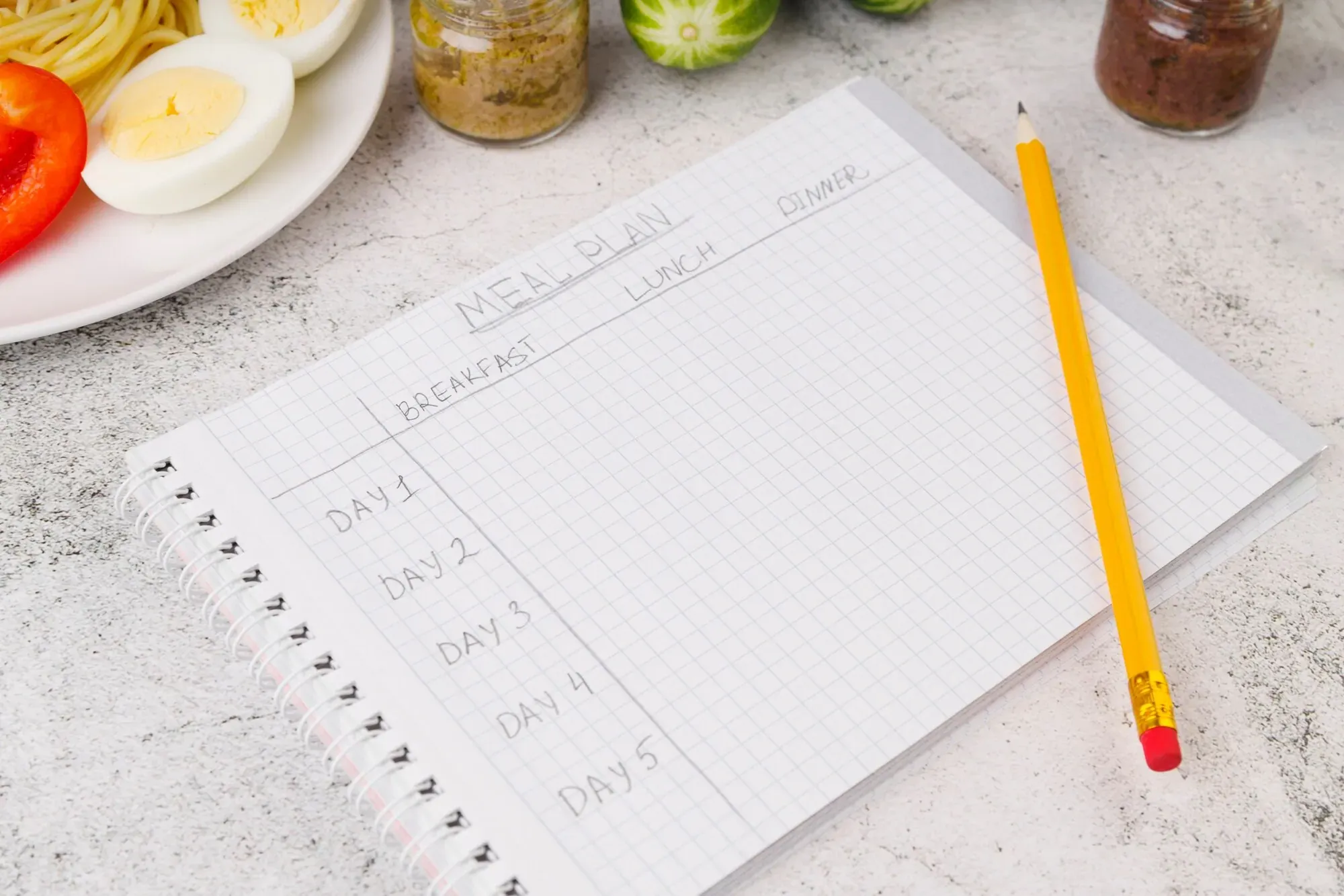
The weeks repeat formats but not exact meals. Rice bowls and tacos share toppings. The pasta sauce can support flatbreads. Roasted vegetables can become an omelet filling, provided they were cooled and stored safely. If you want a copyable calendar beside this rotation, use the weekly meal planner template.
Reuse groceries without forcing the same dinner
Make a core list and a change list
Split shopping into two layers. The core list contains ingredients used repeatedly: a preferred grain, pasta, eggs or another staple, canned beans, frozen vegetables, onions, garlic, bread or tortillas, and dependable seasonings. The change list contains the fresh produce, proteins and special ingredients for the current week.
Check what you already have before copying the core list. A reusable list is a reminder, not an automatic purchase. The guide to combining ingredients into one grocery list adds a practical quantity check.
Plan ingredient handoffs
An ingredient handoff gives an opened or cooked item a second clear destination. Roast vegetables can move into a rice bowl. Herbs can finish soup and flatbreads. Yogurt can become a topping and a sauce. Write the second use beside the ingredient; do not rely on remembering it later.
Keep rotation leftovers safe
A calendar does not extend a food's safe storage time. Label cooked extras with the date and decide whether they are for a near-term meal or the freezer. The USDA says cooked leftovers are generally kept in the refrigerator for three to four days, while its guidance also recommends refrigerating perishable food within two hours.
The FDA's food-storage guidance says to keep the refrigerator at or below 40°F/4°C and the freezer at 0°F/−18°C. Follow ingredient-specific instructions, cool and cover food promptly, prevent cross-contamination, reheat appropriately, and discard food when its handling is uncertain. Do not schedule a Thursday dinner around a Monday leftover unless the exact food and storage history make that safe.
How Dishday can hold the rotation
The method works on paper or in a note. If you want recipes, days and shopping connected, Dishday's meal planner can hold breakfast, lunch and dinner slots. Save only the dinners that earned a place in the rotation, copy the framework into the coming week, and review the combined ingredients in the grocery list.
Treat the app as the place that remembers the plan, not as a guarantee that the plan is correct. You still choose portions, confirm allergens, check what is already at home and adjust when the schedule changes.
Limits and practical checks
A family dinner rotation is an organizational tool, not individualized nutrition or medical advice. It should reflect cultural preferences, budget, equipment, cooking skill, dietary needs and professional guidance that applies to your household.
Review the rotation at the change of season, after a schedule change, or when three meals repeatedly fail. Remove dinners that no longer fit. A good rotation is allowed to stay small, include shortcuts and leave nights unplanned.
Frequently asked questions
How many meals should be in a family dinner rotation?
Start with 12 to 16 dependable dinners across four weeks. That is enough to reduce daily decisions while leaving room for flex nights, leftovers and occasional new recipes. A smaller rotation is better if your schedule changes often.
How often should a dinner rotation repeat?
Four weeks is a practical starting cycle, but two, three or six weeks can work. Repeat when the meals feel useful, not because the calendar demands it. Seasonal meals can swap in without rebuilding the full structure.
How do I avoid getting bored with a meal rotation?
Keep the format and change one main or finishing element. A bowl night can alternate grains, vegetables, proteins and sauces. Add one new dinner at a time instead of replacing the entire rotation.
What if family members want different meals?
Use shared bases with toppings or components served separately, and include a few reliable choices from each person. Do not use this shortcut where an allergy or medical diet requires stricter separation or different preparation.
Should I plan dinner for all seven nights?
Usually not. Start with four or five planned dinners and leave one or two flex nights for leftovers, changed plans, takeout or a tested freezer meal. Planning less can make the rotation more durable.
Choose 12 dinners now, mark the two hardest nights of your week, and build only the first two weeks. When you want the rotation and its shopping list in one place, download Dishday on the App Store.