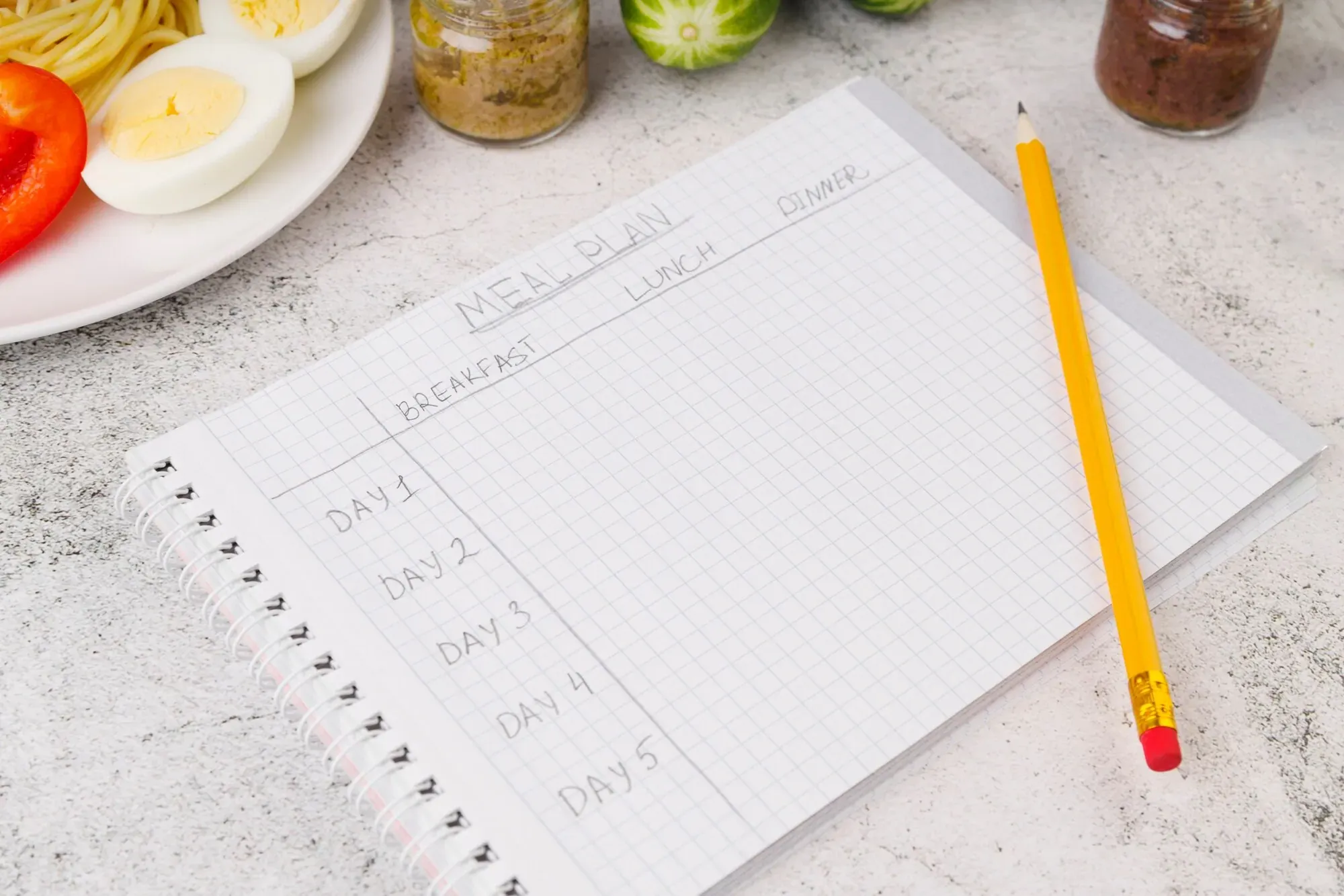

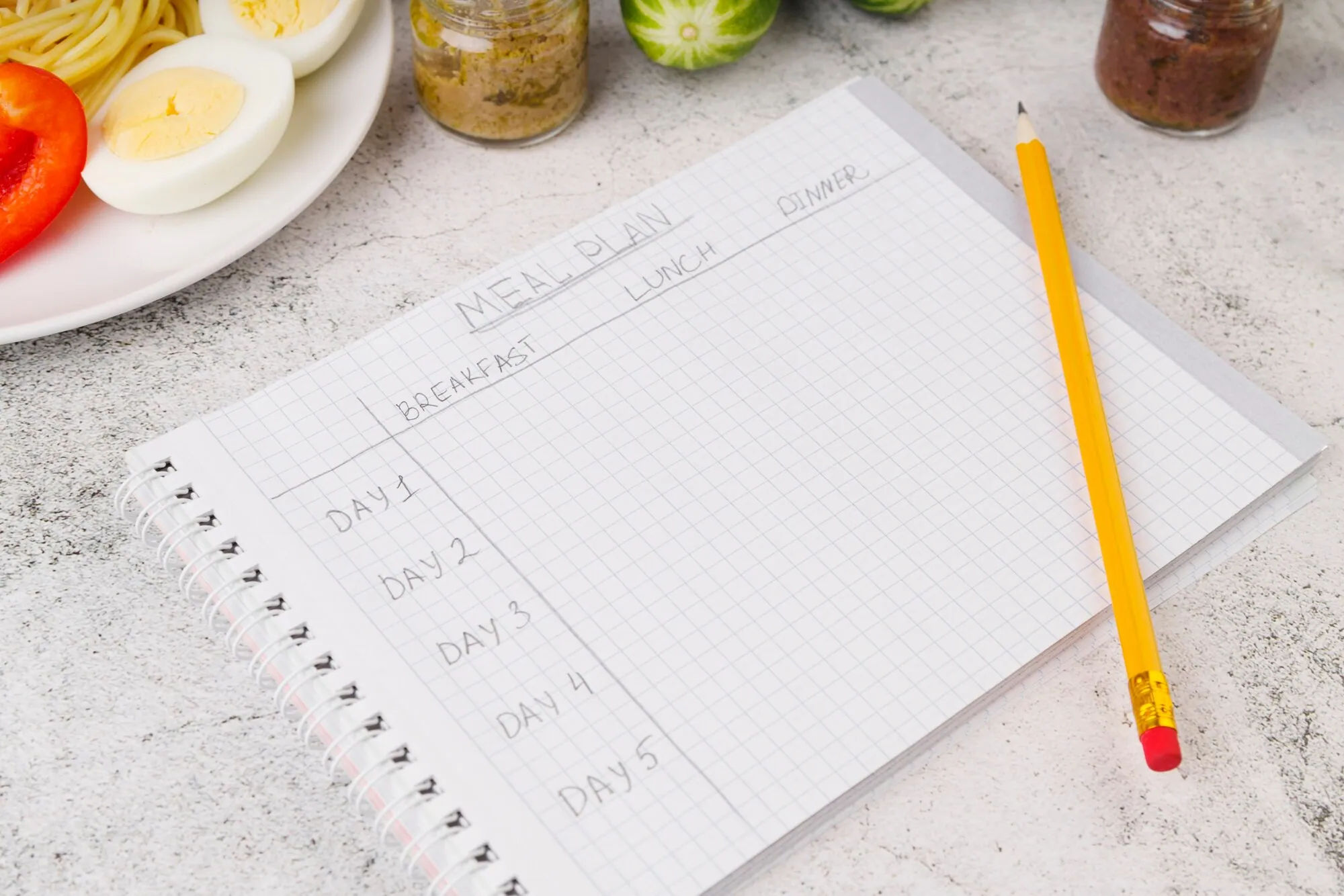
A useful weekly meal planner template is a decision sheet, not a promise to cook 21 elaborate meals. Copy the seven-day layout below, mark the times when you will actually eat at home, list food that needs using, and fill the hardest days first. Leave at least one leftover slot and one flexible slot. Only then turn the chosen meals into a grocery list.
This order keeps the plan realistic when work runs late, somebody eats elsewhere, or Tuesday's dinner makes enough for Wednesday. It also separates three questions that are easy to mix together: what you want to eat, when you can cook, and what you need to buy.
Copy this weekly meal planner template
The blank seven-day layout
Copy these lines into a note, document or notebook. Keep only the meal slots you genuinely plan. If breakfast is always the same, write it once under “repeat meals” instead of copying it seven times.
Monday — Breakfast: ___ | Lunch: ___ | Dinner: ___ | Prep or leftovers: ___
Tuesday — Breakfast: ___ | Lunch: ___ | Dinner: ___ | Prep or leftovers: ___
Wednesday — Breakfast: ___ | Lunch: ___ | Dinner: ___ | Prep or leftovers: ___
Thursday — Breakfast: ___ | Lunch: ___ | Dinner: ___ | Prep or leftovers: ___
Friday — Breakfast: ___ | Lunch: ___ | Dinner: ___ | Prep or leftovers: ___
Saturday — Breakfast: ___ | Lunch: ___ | Dinner: ___ | Prep or leftovers: ___
Sunday — Breakfast: ___ | Lunch: ___ | Dinner: ___ | Prep or leftovers: ___
Add four notes below the week
Use first: food with the nearest use-by date, open packages and ready leftovers.
Schedule limits: late meetings, sports, travel, guests and meals away from home.
Repeat meals: breakfasts, packed lunches or snacks that stay the same.
Flex options: one freezer meal, pantry dinner, takeaway or simple eggs-and-toast night.
The USDA MyPlate meal-planning tip sheet recommends checking the freezer, cabinets and refrigerator, mapping meals for the week, considering the schedule, planning leftovers and making a grocery list from the selected meals. The template above puts those actions on one page; it does not prescribe a diet or require every slot to be filled. See the official MyPlate meal-planning tip sheet.
Decide what the template must solve
Keep the scope smaller than the week
Before choosing dishes, name the problem. You may need only five dinners, three packed lunches or weekday breakfasts. Planning every eating occasion because the template has space creates work without improving the week.
Write a one-sentence goal: “We need four home dinners, one leftover night and lunches for two workdays.” That sentence tells you which boxes matter. It also prevents restaurant plans, school meals and habitual breakfasts from becoming unnecessary recipe searches.
Choose the planning window that matches your shopping rhythm. A seven-day view is convenient, but it does not mean all food must be bought once or all produce must last seven days. If you shop twice, mark the second shop in the schedule and split perishable purchases accordingly.
Check the schedule before choosing meals
Mark fixed constraints first
Add work, school, travel and social commitments before recipe names. For each dinner, estimate available active time, not only the total time printed on a recipe. A slow-cooker dish may take hours but need little evening attention; a 30-minute recipe may be unrealistic if it requires uninterrupted chopping just when everyone arrives home.
Use three effort labels:
quick: roughly 10–20 minutes of active work;
standard: a normal cooking session with time to clean up;
project: a longer recipe best kept for a quiet evening or weekend.
Now place effort limits into the week: “Tuesday—quick,” “Thursday—no cooking,” “Sunday—project.” The limit should choose the meal, not the other way around. When two demanding days sit together, plan one cooked component to carry into the second day.
Check what food must be used
Do a three-minute inventory
Look first for prepared food and fragile ingredients, then for freezer and pantry anchors. You do not need a complete household inventory. Record only items that can change this week's decisions.
Use three short lists:
Eat soon: cooked leftovers, opened dairy, cut produce, herbs and ripe fruit.
Build around: a protein, cooked grain, vegetables or sauce that could anchor a meal.
Always available: dependable pantry or freezer meals for the flex slot.
Check labels, storage condition and safety instead of assuming every item should be rescued. Meal planning cannot make questionable food safe. The MyPlate guidance also starts with seeing what you already have and checking dates before adding meals.
Fill the week in the right order
Place anchor meals before easy slots
Start with the most constrained moments: the late workday, the night before an early start, the day guests arrive or the evening when a perishable ingredient must be used. Give those boxes specific meals. Then place one or two anchor recipes that create useful components, such as roast vegetables for bowls and wraps or rice for dinner and a later lunch.
Do not fill Monday through Sunday in order. Fill hardest to easiest. An easy Friday can absorb a shifted Thursday meal; a tightly scheduled Tuesday cannot absorb an ambitious Monday recipe.
Reserve leftovers and a flex meal
Write leftovers into a named box rather than hoping they disappear. “Wednesday lunch—Tuesday soup” is a plan; “use leftovers sometime” is not. If portion size is uncertain, write a backup beside it, such as soup plus toast or leftover chicken plus salad.
Keep one flex meal uncommitted. The flex slot is not failure. It is capacity for changing plans, unfinished leftovers or lower energy. Use something stable: freezer dumplings, pasta with a pantry sauce, omelet, sandwiches or takeaway within your budget. A rigid plan breaks; a plan with spare capacity bends.
Turn meals into one prep plan
Write actions, not full recipes
Under “prep or leftovers,” record only work that makes a later meal easier: thaw beans, wash greens, cook double rice, mix dressing, move a frozen meal to the refrigerator, or pack Tuesday's lunch. Do not copy every recipe instruction into the weekly view.
Group actions by moment. If the oven is already on Sunday, roast vegetables for Monday. If you chop onions for one dish, prepare the amount needed for the next meal too, but only when storage and recipe quality allow it. A ten-minute action connected to a specific meal is more useful than a vague two-hour “meal prep” block.
Turn the plan into a grocery list
Total, subtract and keep quantities visible
Open the recipes for the meals you actually placed. Add ingredient quantities across recipes, normalize compatible units, then subtract usable food already at home. Keep recipe-specific notes where combining would be unsafe or confusing, such as “one whole avocado for Friday” rather than only “avocados.”
Add breakfast staples, snacks and household items after recipe ingredients. Finally, divide the list by where you shop or by practical sections such as produce, proteins, dairy, pantry and frozen. Do not buy an ingredient merely because it appeared in a rejected meal idea.
For a detailed method, the guide to combining recipe ingredients into one grocery list covers duplicate names, unit conversion and totals.
Worked example: a realistic five-dinner week
Start with the constraints
Imagine two adults who need five home dinners. Tuesday has a late meeting, Thursday includes an evening appointment, and Saturday is open. The refrigerator has half a cabbage, carrots and cooked rice to use. The freezer has dumplings. Breakfast repeats, and lunches mostly come from leftovers.
The planning goal is therefore not “find seven exciting dinners.” It is “use the vegetables and rice, cover two busy nights, cook five dinners and create two lunches.”
Fill the template
Monday — Dinner: cabbage and carrot stir-fry with the cooked rice | Prep: cook extra stir-fry for Tuesday lunch.
Tuesday — Dinner: freezer dumplings and quick cucumber salad | Lunch: Monday stir-fry.
Wednesday — Dinner: sheet-pan chicken, potatoes and carrots | Prep: reserve chicken for Thursday.
Thursday — Dinner: leftover chicken wraps with cabbage slaw | No separate cooking project.
Friday — Dinner: flex slot; use remaining leftovers first, otherwise pasta with pantry tomato sauce.
Saturday — Dinner: slower bean stew | Prep: make enough for Sunday lunch or freeze portions.
Sunday — Dinner: omelet with remaining vegetables and toast | Lunch: bean stew.
This plan repeats ingredients without repeating the same dinner. It gives leftovers an address, protects two busy nights and keeps Friday open. The grocery list needs only the gaps around cabbage, carrots, rice and dumplings already at home.

Review the template in two minutes
Ask six practical questions
Does every cooking-heavy meal fit the time and energy available that day?
Is food that must be used soon assigned to a specific meal?
Does at least one planned meal intentionally create a lunch or second dinner?
Is there a flex slot for changed plans?
Can each cook tell what needs thawing or preparing in advance?
Does the grocery list contain only ingredients for meals still on the plan?
If the answer to two or more questions is no, remove a meal before adding another. Simplifying the week is usually more useful than finding a more complicated recipe.
How Dishday can hold the same weekly plan
The paper or note template works on its own. If you want the week connected to editable recipes, Dishday's current weekly meal planner lets you place chosen meals into days while keeping control over replacements. Ingredients from planned recipes can then move into the grocery list for review against food at home.
Start with the constraints and template above; the app should store decisions, not make the week unrealistically full. The guide to a simple weekly dinner plan for busy weeknights provides more help choosing dinner patterns. Dishday's official pages and current App Store listing describe support for iPhone, iPad and Apple Watch; verify current device and operating-system requirements in the store.
Limits and safety checks
A weekly template is an organizational tool, not nutrition or medical advice. Dietary restrictions, allergies and medical needs require appropriate professional guidance and independent label checks. Confirm recipe ingredients, cooking temperatures, dates and storage conditions yourself.
Do not treat a written leftover slot as proof that food will remain safe until that day. If plans change, cool, store, freeze or discard food according to reliable food-safety guidance and the product's condition. Recheck the plan after a major schedule change instead of forcing every original meal into fewer days.
Frequently asked questions
What should a weekly meal planner template include?
Include the days you plan, the meal slots you actually need, schedule limits, food to use first, prep or thawing tasks, leftovers and one flex option. Keep the grocery list separate until meals are chosen so rejected ideas do not create purchases.
Do I need to plan breakfast, lunch and dinner every day?
No. Plan only decisions that create friction. Repeating breakfasts can be written once, school or workplace meals can be marked “away,” and lunches can point to named leftovers. A smaller completed template is better than a full sheet you ignore.
How far ahead should I plan meals?
Plan for the period you can reasonably see and shop for. Seven days works for many households, but a three- or four-day plan may suit variable schedules or frequent shopping. Keep the same method: constraints, inventory, meals, prep, then groceries.
How do I make a meal plan flexible?
Leave one flex slot, keep a stable freezer or pantry backup, and avoid assigning every leftover before you know the yield. Put demanding meals on days with spare time and write a simple alternative next to any uncertain slot.
Can I reuse the same weekly meal plan?
Yes. Save a successful week as a starting pattern, but recheck the current schedule, food at home and seasonal availability before copying it. Reuse the structure and favorite meals, not last week's assumptions.
Copy the seven-day layout now and fill only your three hardest meal decisions. If you want to keep recipes, the weekly plan and groceries connected, download Dishday on the App Store.