
A reliable holiday appetizer menu needs five roles, not fifteen unrelated recipes: one warm bite, one chilled make-ahead option, one fresh platter or dip, one filling item, and one simple backup that can be opened or assembled quickly. Choose one idea for each role, prepare most components before guests arrive, and bring perishable food out in small batches.
The twelve ideas below are flexible starting points, not a fixed menu. Adjust ingredients, quantities and labels for the occasion, allergies, available equipment and local food-safety guidance.
Start with the event, not the recipes
Decide what the appetizers need to do
Appetizers before a full dinner should welcome guests and bridge a short wait. They do not need to replace the meal. For a drinks reception or open house, the appetizers are the meal, so include more substantial choices and plan for refills over a longer serving window.
Write down four constraints: guest count, serving time, refrigerator space and oven space. Also note whether people will sit or stand; a bite that needs a knife, two hands and a table is a poor fit for a crowded room.
Build a five-part menu
Pick one option from each role:
Warm: mushrooms, meatballs, pastry bites or a hot dip.
Chilled: tartlets, crostini toppings, fish bites or a bean spread prepared ahead.
Fresh: vegetables, fruit, pickles or a crisp salad-style skewer.
Filling: potatoes, beans, eggs, cheese, meat, fish or another substantial component.
Backup: olives, crackers, roasted chickpeas, spiced popcorn or another ready-to-serve item.
One dish can cover two roles: mushrooms are warm and filling, while a hummus board is fresh and substantial. Limit last-minute cooking to one or two items.
12 holiday appetizer ideas that are easy to adapt
1. Stuffed mushrooms with an adjustable filling
Fill the caps with breadcrumbs and herbs, soft cheese, lentils or chopped vegetables. Prepare the filling and clean the caps earlier, then stuff and bake shortly before serving. Verify packaged ingredients when avoiding dairy or wheat.
2. Puff-pastry pinwheels
Spread pastry with pesto, tapenade, mustard and cheese, or a cooked vegetable filling; roll, chill, slice and bake. Follow the dough label for storage and keep the filling fairly dry so the center bakes instead of steaming.
3. Mini meatballs with one glaze
Use meat, poultry, beans or lentils with one sauce that is not too runny. Bake ahead, chill promptly and reheat safely. Offer picks and small plates for saucy bites.
4. Mushroom-and-herb tartlets
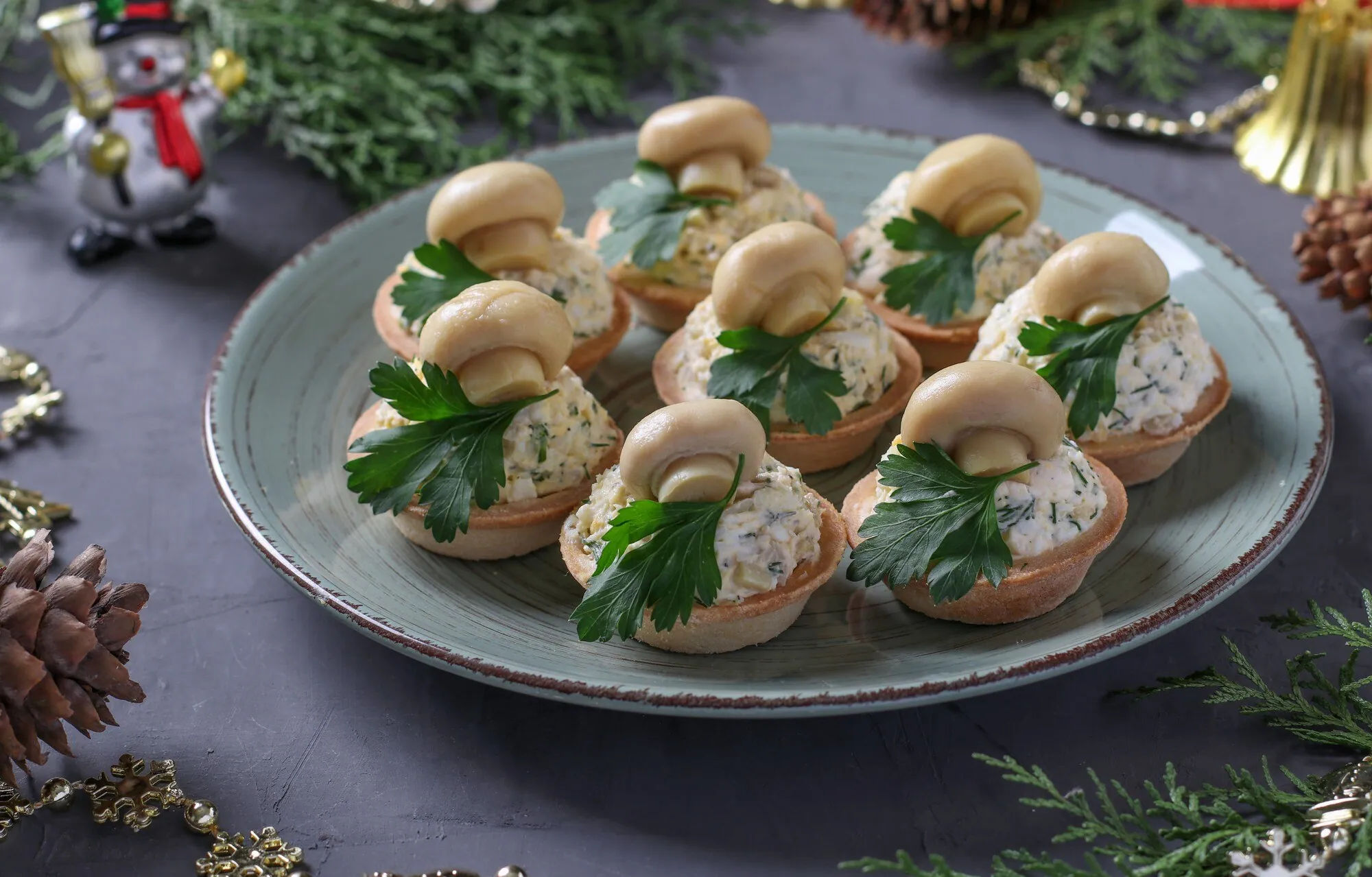
Fill small baked shells with mushrooms, herbed cheese or a bean spread. Keep shells and filling separate until close to serving, then add herbs or pickled onion.
5. Whipped cheese or white-bean dip
Blend cheese with herbs, or white beans with lemon and olive oil for a dairy-free direction. Make it a day ahead, then put half in a small bowl and refill instead of leaving the entire batch out.
6. Hummus and roasted-vegetable board
Arrange hummus with roasted vegetables, cucumber, pita and crackers. Separate crisp and moist foods, provide a spoon, and label sesame because tahini is a common hummus ingredient.
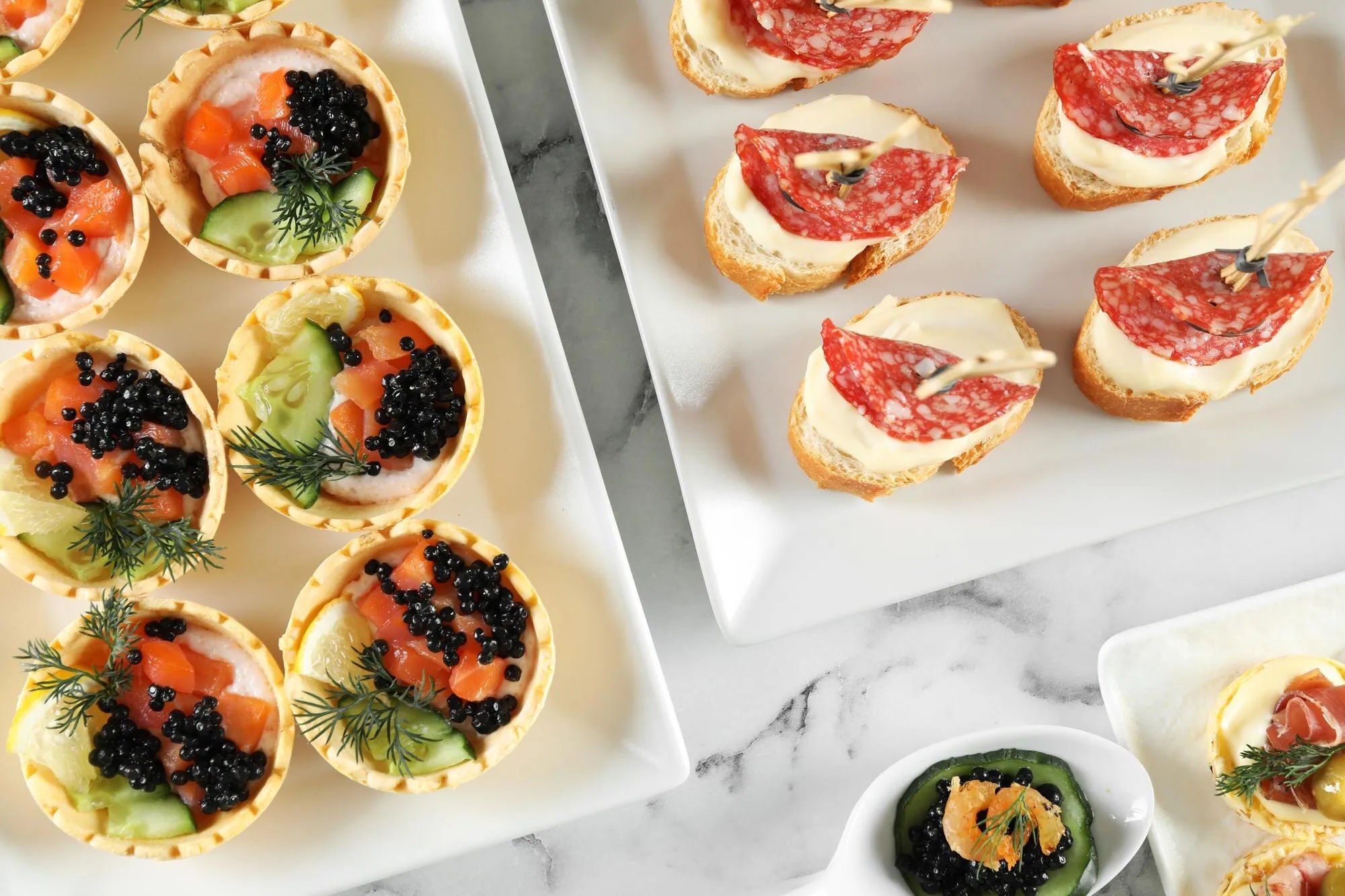
7. Smoked-salmon rye bites
Top rye squares or cucumber rounds with spread, smoked salmon, dill and lemon. Assemble close to serving, keep the fish cold and make a separate non-fish platter if cross-contact matters.
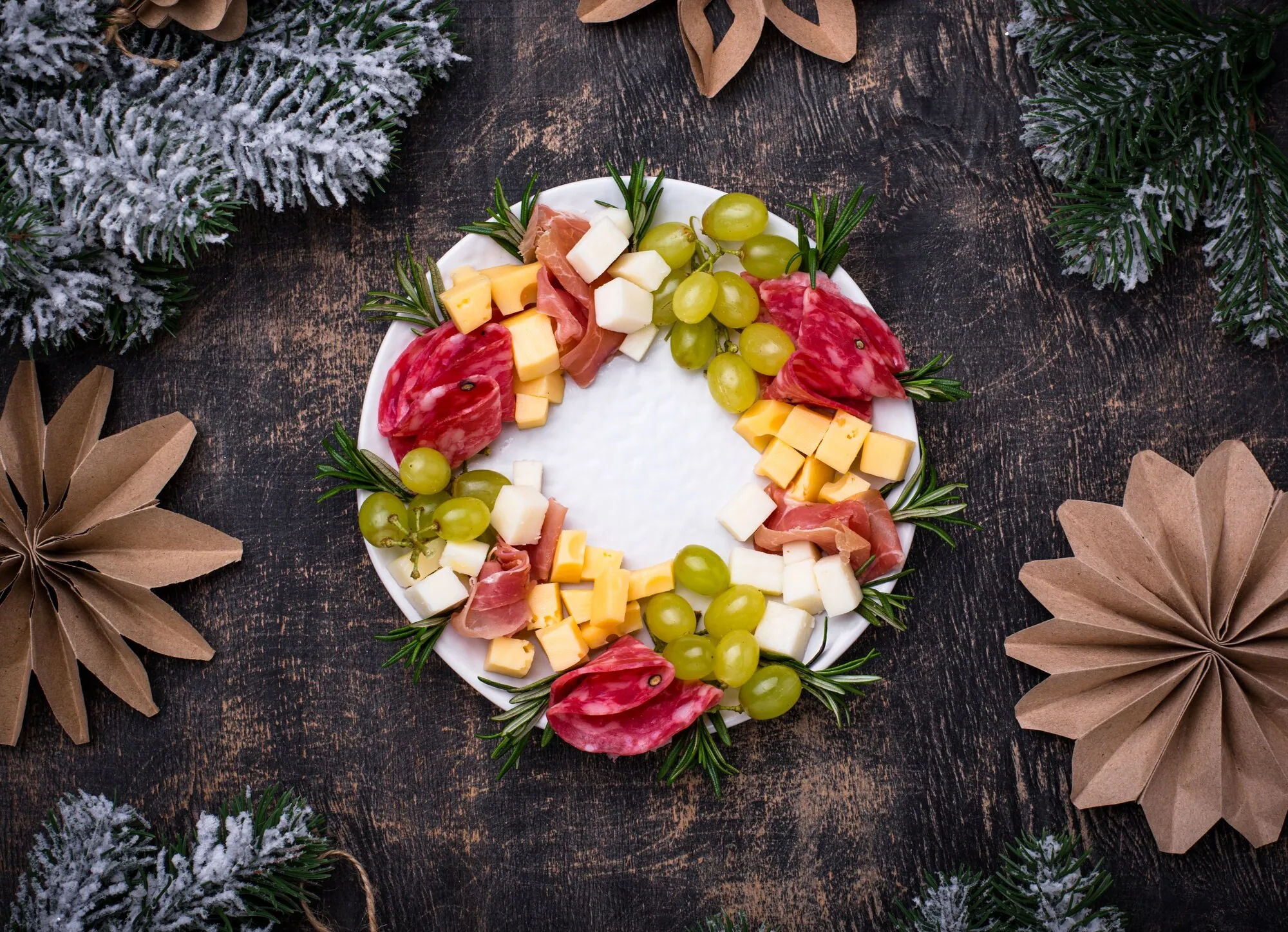
8. A holiday wreath snack board
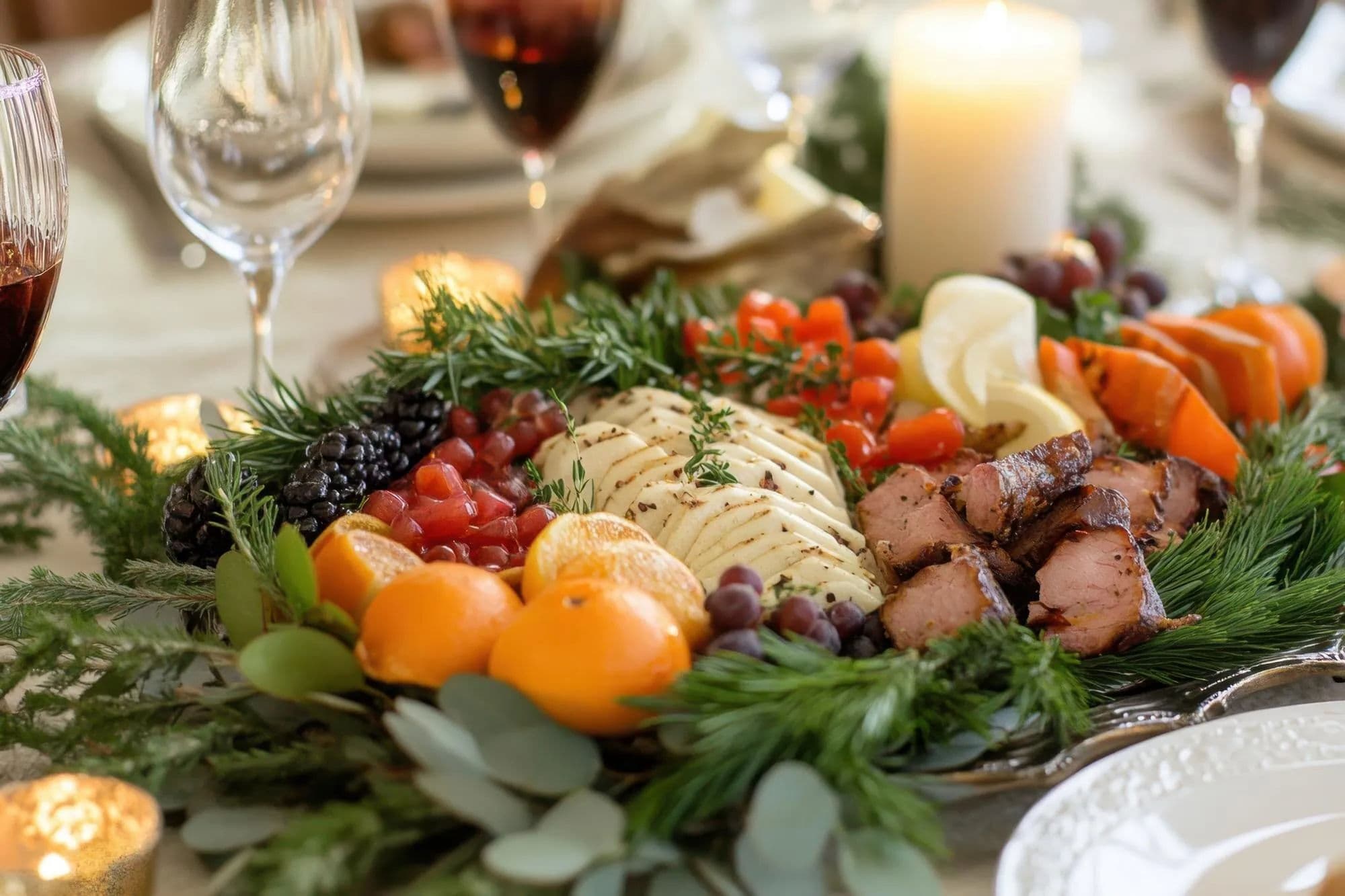
Arrange cheese, grapes, cured meat, olives, vegetables and rosemary in a ring around a small dip. For vegetarian guests, use separate sections and utensils rather than asking them to pick around meat.
9. Roasted grape and ricotta crostini
Roast grapes, toast bread and prepare the ricotta separately. Assemble one tray before guests arrive and refill later; pear, apple or roasted tomato can replace grapes.
10. Stuffed dates with a savory contrast
Fill dates with soft cheese, seed butter or a bean-and-herb mixture, then add pepper or a pickled garnish. Nuts are optional. Keep the portions small and pair them with something crisp or acidic.
11. Crispy potato bites
Roast small potatoes until crisp, then top with herbed yogurt, bean spread or smoked fish. Re-crisp before serving and add cold toppings afterward. Check every topping when a gluten-free option is needed.
12. A pantry bowl trio
Set out three contrasting label-stable options such as olives, crackers and roasted chickpeas. They cover early arrivals or a delayed cooked item. Refill from packages and keep labels available.
Balance flavor, texture and dietary needs
Create contrast without doubling the work
Aim for one crisp item, one creamy item, one pickled element and one warm savory bite. Repeat ingredients deliberately: the same herbs can finish mushrooms, dip and crostini; roasted vegetables can serve a board and a tartlet filling.
Avoid choosing five beige pastry dishes or five soft dips. If the menu already has pastry and crostini, make the fresh option mostly vegetables or fruit. If two choices contain cheese, let the filling option use beans, potatoes, eggs, fish or meat.
Ask about allergies before finalizing the menu
Ask guests directly and keep packaging until the event is over. In the United States, the FDA identifies nine major food allergens: milk, eggs, fish, crustacean shellfish, tree nuts, peanuts, wheat, soybeans and sesame. Its current food-allergy guidance also explains why labels and cross-contact controls matter. Rules differ by country, so use the guidance that applies where you live.
Do not promise that a shared buffet is allergen-free unless the whole preparation and service process supports that claim. Use separate boards, knives, bowls and serving utensils where cross-contact is a concern. Label the dish and its main allergens clearly instead of relying on appearance.
Use a make-ahead timeline
Two days before and the day before
Two days before, confirm the guest count, clear refrigerator space, buy pantry items and check serving dishes. Make components only within their safe storage windows and keep crisp foods protected from moisture.
The day before, prepare components that reheat well, toast dry toppings and label containers. Group each appetizer's parts together, but keep crisp bases away from moist toppings.
The day of the gathering
In the morning, cut vegetables and portion backup snacks. One to two hours before serving, bake the warm item, assemble the first cold tray and move refill portions to the front of the refrigerator.
Serve the first batch, not the entire quantity. Refill from safe storage as needed. This keeps the table looking fresh, reduces waste and makes temperature control easier.
Estimate quantities without overbuying
When dinner follows
As a planning starting point, allow roughly four to six small bites per adult when appetizers last about an hour before a full meal. Children, long arrival windows and very small or large pieces change that estimate. It is better to count actual pieces than to write “one platter” on the shopping list.
For eight adults, forty total bites across five choices is a useful first calculation: eight mushrooms, eight pinwheels, eight salmon or cucumber bites, eight potato bites and eight easy board portions. Keep the pantry backup closed until needed.
When appetizers are the meal
Start closer to eight to twelve small bites per adult for an appetizer-only event, spread across several substantial and fresh options. Increase the estimate for a long evening and reduce it when pieces are larger. Keep at least two filling choices so guests are not trying to make dinner from olives and cucumber.
Buy by shared ingredients. Total parsley once if it appears in three dishes, and choose crackers that work for more than one item. Check actual package weights rather than assuming every box is equal.
A workable five-item menu for eight guests
Choose one calm menu
For a one-hour welcome before dinner, try stuffed mushrooms, puff-pastry pinwheels, a hummus and vegetable board, smoked-salmon cucumber bites and a bowl trio of olives, crackers and roasted chickpeas. The mushrooms and pinwheels are warm; the board serves as the fresh choice; salmon adds a distinct savory option; the trio covers delays.
Make hummus and mushroom filling the day before, then roll and chill the pastry. On the day, cut vegetables, bake the warm items, assemble one salmon tray and refill cold food from the refrigerator.
Turn the menu into one shopping list
List the shared produce first: mushrooms, cucumbers, carrots, peppers, lemon, herbs and any fruit. Then add the filling ingredients, pastry, hummus components, fish, bread or crackers, olives and chickpeas. Finally add practical supplies such as napkins, picks, labels and ice if the serving setup needs them.
Review the list against the pantry and available serving dishes. The weekly meal planner template can place preparation tasks beside the rest of the week's meals.
Serve appetizers safely
Keep hot food hot and cold food cold
FoodSafety.gov advises keeping hot food at 140°F/60°C or above and refrigerators at 40°F/4°C or below. Its official four steps to food safety also say not to leave perishables unrefrigerated for more than two hours, or more than one hour when the temperature is above 90°F/32°C.
Use a thermometer where appropriate and follow package or recipe cooking directions. Put out small bowls and trays, note the time they leave temperature control, and replace them with fresh batches instead of topping old food with new food. Decorative candles and warm rooms do not provide safe hot holding.
Cool and store leftovers promptly
Move safe leftovers into shallow containers and refrigerate promptly. Discard food when its time or temperature history is uncertain. Keep ready-to-eat leftovers separate from raw ingredients, and label containers so the next person knows what they contain and when they were prepared.
After the event, prioritize the most perishable items in the next day's plan. The guide to organizing the refrigerator to reduce food waste explains how to create an “eat first” area without mixing raw and ready-to-eat foods.
How Dishday can organize the menu and shopping
Connect selected appetizers to preparation days
This workflow works on paper. If you want recipes, dates and groceries connected, Dishday's meal planner can hold the chosen appetizers beside the rest of the week. Place make-ahead components on the day you will prepare them and the finished items on the gathering day.
Then bring recipe ingredients into the grocery list, combine repeated items and remove what is already at home. Review every quantity and allergen yourself. The app can organize recipes and tasks, but it cannot verify a guest's allergy, safe holding temperature or the condition of food on the buffet.
Limits and practical checks
These holiday appetizer ideas are general planning suggestions, not individualized medical or nutrition advice. Change ingredients for allergies, dietary restrictions, pregnancy, age, swallowing concerns and guidance from an appropriate clinician. Follow local food-safety advice when it differs from the US sources used here.
Check oven capacity, refrigerator space, serving utensils and transport before committing to the menu. If guests are bringing dishes, agree on what needs reheating or refrigeration. A smaller menu served well is more useful than a long list that cannot be stored or served safely.
Frequently asked questions
What are the easiest holiday appetizers for a crowd?
Choose one baked tray item, one dip with vegetables and crackers, one chilled bite, one filling potato or protein option and one pantry backup. Reuse herbs and produce across dishes, and limit last-minute cooking to one or two items.
Which holiday appetizers can I make ahead?
Dips, cooked fillings, meatballs, roasted vegetables and many pastry rolls can be prepared partly ahead. Store each component within its safe window and keep crisp bases separate from moist toppings until close to serving.
How many appetizers should I make per person?
For about an hour before dinner, four to six small bites per adult is a practical starting estimate. For an appetizer-only event, start around eight to twelve. Adjust for duration, guest mix, piece size and whether substantial food follows.
How do I plan appetizers for different diets?
Ask guests about restrictions, choose at least one substantial option that fits each confirmed need, and label dishes. Use separate preparation areas and utensils when cross-contact matters; do not assume removing a visible topping makes a dish safe.
How long can holiday appetizers sit out?
US guidance says perishable food should not remain unrefrigerated for more than two hours, or one hour above 90°F/32°C. Keep hot items at 140°F/60°C or above, cold items at 40°F/4°C or below, serve small batches and discard food with an uncertain history.
Choose five roles for your gathering, select one idea for each, and write the make-ahead day beside every recipe. To keep those recipes and one reviewed shopping list together, download Dishday on the App Store.