
Organize your fridge around two priorities: food safety and visibility. Keep it at 40°F (4°C) or below, contain raw meat, poultry and seafood so juices cannot drip, and give the most visible space to food that should be eaten soon. Add a small “use first” zone, date leftovers, and spend ten minutes checking the fridge before each grocery shop.
The goal is not a showroom refrigerator or a matching set of bins. It is a system that answers three ordinary questions quickly: What is safe? What needs attention? What can become the next meal?
Start with a safe refrigerator, not a pretty one
Organization cannot compensate for unsafe temperature or cross-contamination. Do these checks before rearranging sauces and produce.
Verify the temperature
The USDA refrigeration guidance and the FDA refrigerator guidance say a refrigerator should stay at 40°F (4°C) or below. A small appliance thermometer is more useful than guessing from the control dial. Check it in a location you can read easily and avoid packing the fridge so tightly that cold air cannot circulate.
If the temperature is too high, fix that first. Moving yogurt to a labeled bin will not keep it safe in a warm refrigerator.
Contain raw foods
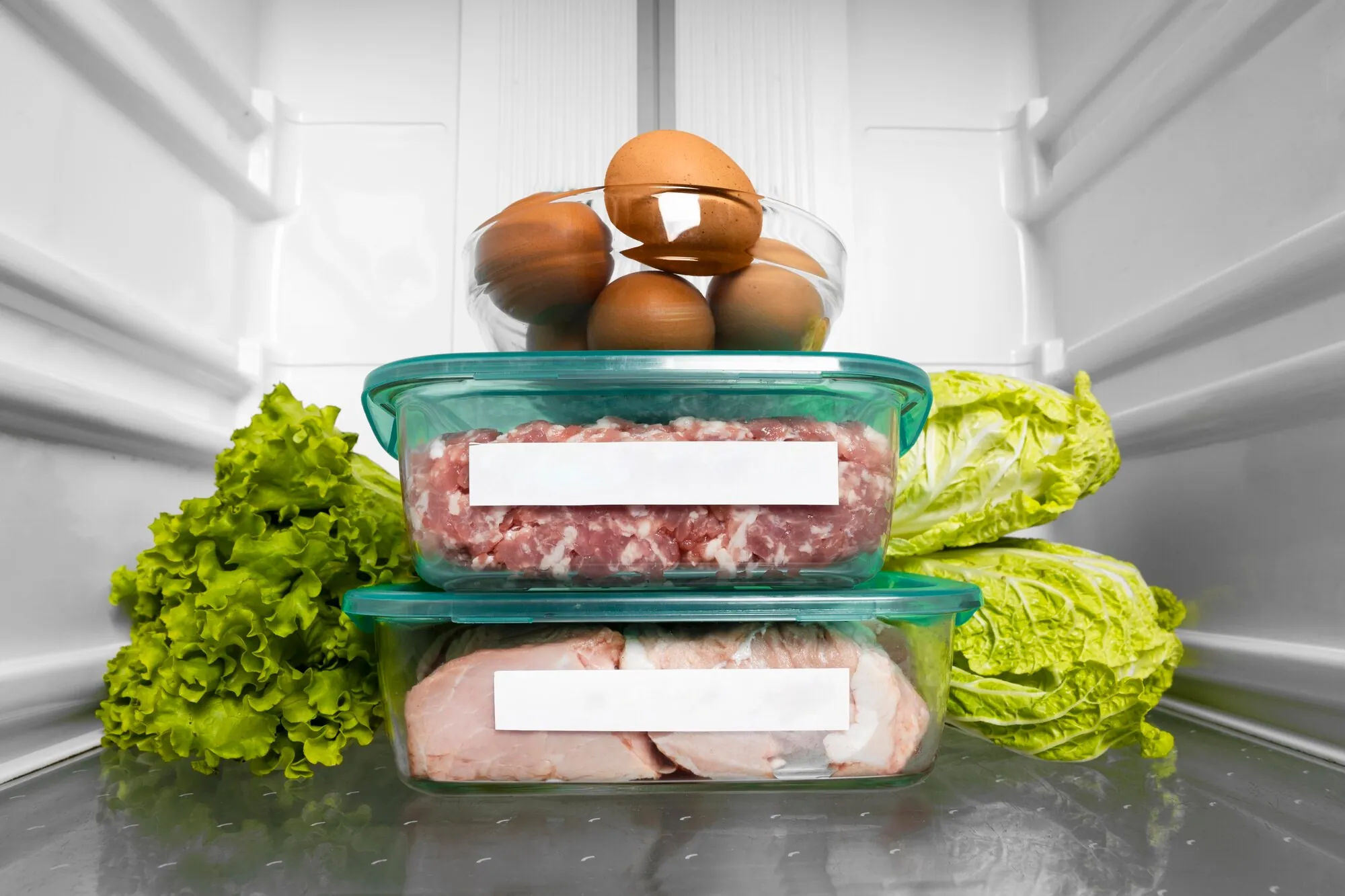
Raw meat, poultry and seafood should be securely wrapped or stored in a leakproof container. Put them low enough that a damaged package cannot drip onto leftovers, fruit, salad greens or other ready-to-eat food. This is a containment rule, not a claim that every refrigerator has exactly the same temperature pattern.
Keep eggs in their carton on a shelf rather than in the door. The door experiences more temperature fluctuation and is better suited to condiments and other less temperature-sensitive items.
Build zones around decisions you actually make
A useful fridge has a few stable homes, but it does not need a plastic bin for every category. Assign space by what you need to do with the food.
Eye level: ready to eat and use soon
Put cooked food, opened packages, prepared ingredients and soon-to-expire items where you see them first. This is the most valuable shelf because it converts visibility into action. A half container of rice behind six jars is technically stored but practically forgotten.
Reserve one tray or part of a shelf for food that should influence the next meal. Keep the zone small. If everything is “urgent,” nothing is.
Lower shelf: contained raw ingredients
Use a washable tray or leakproof containers for raw animal foods. Grouping them makes spills easier to catch and keeps them away from ready-to-eat items. Do not let a large raw package block airflow or hide older food behind it.
Door: condiments, not the most perishable food
The EPA’s home food-waste guidance notes that the door is the warmest area. Use it for mustard, sauces, pickles and other items that tolerate normal door temperature changes. Milk, eggs and highly perishable food are better on an interior shelf.
Crispers: use humidity with a purpose
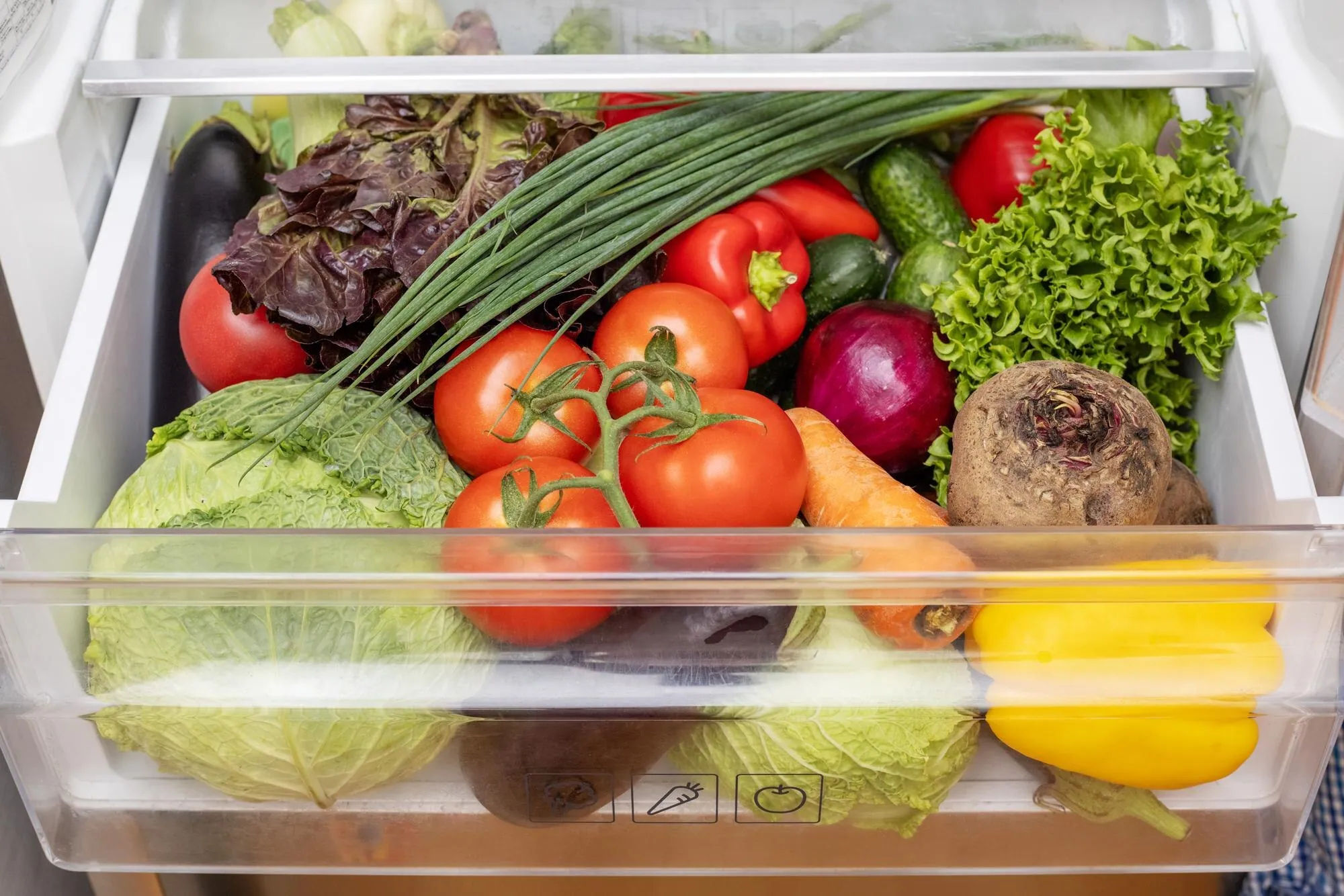
Many vegetables that wilt, including leafy greens, carrots, cucumbers and broccoli, do better in a high-humidity drawer. Many fruits and produce that tend to rot, such as mushrooms and peppers, suit a lower-humidity drawer. Check your refrigerator manual because drawer controls differ.
Do not wash berries, cherries or grapes until you are ready to eat them unless you have a specific drying and storage method. Extra moisture can encourage mold. Keep ethylene-producing fruit such as apples, pears, bananas, stone fruit and avocados away from produce that ripens too quickly beside it.
Keep food visible without over-organizing
Clear containers help only when they fit your habits. Before buying organizers, remove empty packaging, combine duplicate open products when safe, and adjust shelves so ordinary containers are easy to reach.
Use shallow rows rather than deep stacks. Put tall items at the back and short items at the front. Turn labels outward. Store similar small items together, but avoid a bin so deep that it becomes another hidden drawer.
Visibility also means leaving a little empty space. An overfilled refrigerator hides food, slows air circulation and makes the weekly check harder. The right amount of organization is the minimum that lets you see and reach what you own.
Label with a decision, not just a date
A date answers “when,” but a useful label also answers “what next.” Write the food and the date it was cooked or opened. If helpful, add a short action:
chicken — cooked Tuesday — use for Thursday wraps;
rice — cooked Wednesday — lunch or freeze Friday;
half cucumber — use first;
soup — two portions — freeze one.
For storage limits, use the official FoodSafety.gov cold storage chart or FoodKeeper rather than a memory rule for every ingredient. As one common example, many cooked leftovers are listed for three to four days in a refrigerator at 40°F (4°C) or below. Safety depends on correct cooking, cooling and handling too.
Labels should support judgment, not replace it. A date does not make food safe if it sat out too long, was stored too warm or was cross-contaminated.
Create one small “use first” zone
Choose one visible tray, box or shelf section for items that need a plan within the next day or two. Good candidates include opened dairy, cut produce, cooked grains, a small portion of leftovers and herbs starting to soften.
Limit the zone to a manageable number of items. Each item needs one of four decisions:
eat it as it is;
add it to a planned meal;
freeze it while it is still suitable;
discard it if safety or quality is no longer acceptable.
This zone is not permanent storage. It is a short queue. Empty it, clean it and refill it during the weekly reset.
Do a ten-minute reset before shopping
The best time to organize the fridge is not during a dramatic monthly cleanout. It is just before you make the next grocery list.
Use this sequence:
Check the thermometer and look for leaks or spills.
Remove food that is unsafe or clearly spoiled.
Move urgent food into the use-first zone.
List leftovers, opened packages and produce that need a meal.
Freeze suitable food you will not use in time.
Wipe the use-first tray and any spill.
Plan two or three meals around what remains.
Buy only the missing ingredients.
This routine links storage to cooking. Without the meal step, fridge organization simply rearranges food until the next cleanout.
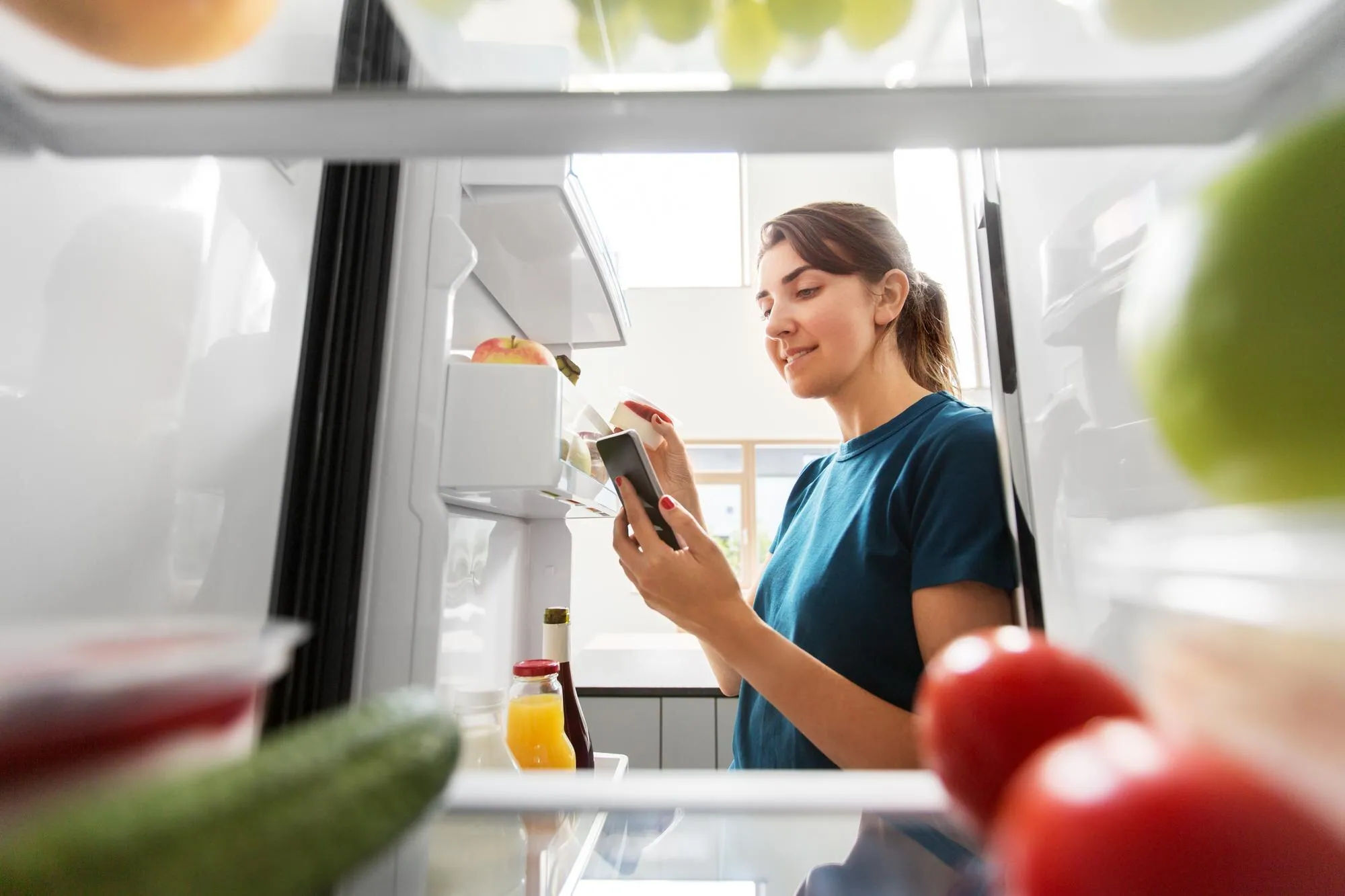
Example: turn a crowded Friday fridge into three meals
Imagine you find cooked rice, roasted vegetables, half a cucumber, yogurt, two chicken portions, spinach and an open jar of salsa.
First, check dates and storage history. Put the chicken in a leakproof container on the lower shelf if it is raw. Move the cooked rice and roasted vegetables into the use-first zone. Keep spinach and cucumber visible rather than buried in a produce drawer.
Then assign meals:
Friday: rice bowls with roasted vegetables, salsa and yogurt sauce;
Saturday: chicken with spinach and the remaining cucumber;
Sunday lunch: any safe cooked chicken and vegetables in wraps or a grain bowl.
The grocery list may need only tortillas, one additional fruit and perhaps an ingredient for breakfast. The food was not saved by a storage bin. It was saved because every visible item received a next action.
How Dishday can connect the fridge check to the week
Dishday is useful after the physical check, when you need to turn ingredients into actual meals. Save recipes that use the items in your use-first zone, place them in the week, and build a grocery list for only what is missing.
Useful next steps:
Map the meals in the Dishday meal planner.
Turn the plan into a grocery list.
Learn how to use leftovers before they go bad.
Reduce incoming clutter by planning meals without overbuying groceries.
Download Dishday on the App Store if you want the planning and shopping steps in one place.
The app does not determine whether a questionable food is safe. Use official storage guidance and your food-safety judgment for that decision.
When organization cannot save the food
Do not rely on smell or appearance alone to rule out harmful bacteria. Discard food when its time or temperature history is unsafe, when raw juices may have contaminated ready-to-eat food, or when official guidance says it should not be kept.
Organization also cannot reverse spoilage. Mold, leaking packages, unusual texture or a clearly off smell are reasons to stop and assess the item, not invitations to hide it in a new container. When in doubt about safety, throw it out.
Frequently asked questions
What should go on the top shelf of the fridge?
Use the top and middle shelves for ready-to-eat food, leftovers and opened products that are safely covered. Exact temperature patterns vary by refrigerator, so check your manual and thermometer rather than assuming one universal shelf map.
Where should raw meat be stored?
Keep raw meat, poultry and seafood securely wrapped or in leakproof containers, separated from ready-to-eat food. A low shelf or contained drawer helps prevent juices from dripping onto other items.
Should milk and eggs go in the refrigerator door?
The door has larger temperature changes. Keep eggs in their carton on an interior shelf, and store milk and other highly perishable food inside the main cabinet. Use door space mainly for condiments and less sensitive items.
How do I organize leftovers so I remember them?
Use clear, shallow containers; label the food and date; and place the oldest safe leftovers at eye level in a small use-first zone. Give each one a specific meal or freezing decision.
How often should I clean and reset the fridge?
Wipe spills immediately and do a short reset before the weekly grocery shop. A deeper clean can happen as needed, but the frequent ten-minute check prevents hidden food from accumulating.
Do I need special refrigerator organizer bins?
No. A washable tray for raw packages and a small use-first container can help, but visibility and consistent zones matter more than matching bins. Start with the containers you already own.