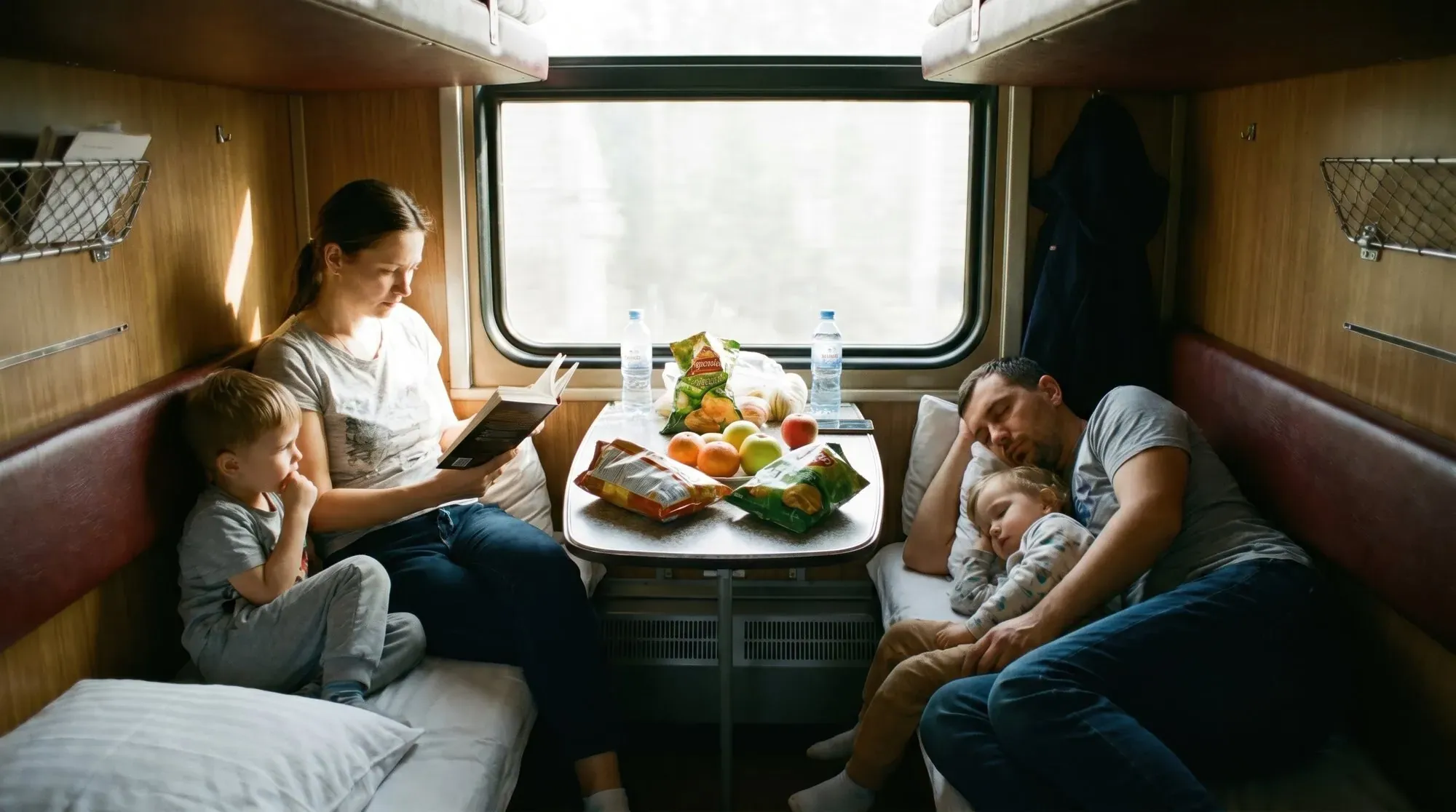
For a 2-day train journey, pack by meals, not by days: usually five or six meals plus snacks. Eat homemade perishable food on the first day, switch to food that keeps without a fridge on the second day, and add a few meals that need only hot water. Pack each meal separately so you open one bag at a time, not the whole stock.
The hard part of a long train trip is not the first lunch. It is breakfast on the second morning, when the cool packs have warmed up, the sandwiches are gone and the next station is hours away. This guide plans that second day first, so you are not left with crackers and regret.
How much food to pack for two days on a train
Count meals, not days
Write down the departure and arrival times, then list every meal that falls in between. A train leaving at 2 p.m. and arriving two days later at 10 a.m. covers dinner on day one, three meals on day two and breakfast on day three, not "two days of food". Add one snack for each long stretch between meals and one sealed reserve portion in case of a delay.
Subtract what you will genuinely eat elsewhere: a meal at home before departure, a planned dining-car dinner or a long station stop where you know food is sold. Do not count on uncertain options. Dining cars can be closed, sold out or expensive, and short stops rarely leave time to queue.
A simple 2-day meal map
Here is a typical map for a train that leaves around midday and arrives on the evening of the second day:
Day 1 lunch: the freshest meal, such as sandwiches, a salad without dressing or cold chicken, eaten within the first few hours.
Day 1 dinner: the second cooled homemade dish, such as baked chicken or a grain salad, kept with the cold sources.
Day 2 breakfast: instant oats, porridge or noodles with hot water, plus bread and fruit.
Day 2 lunch: shelf-stable food: canned fish or beans, crackers or bread, whole fruit and vegetables.
Day 2 dinner or arrival snack: whatever is left of the shelf-stable stock, plus the reserve portion if the train is late.
Snacks fill the gaps: nuts, dried fruit, crackers, cereal bars and firm fruit. Keep water and something warm to drink available all the time.
Eat perishable food first, shelf-stable food last
Day 1: fresh homemade food
Homemade food is the best part of a train journey, but it has a short safe window. The US Department of Agriculture advises keeping perishable food at 40°F (4°C) or colder and not leaving it at room temperature for more than two hours, or one hour above 90°F (32°C). See the USDA advice on keeping packed lunches safe. Ice packs in an insulated bag help for hours, not for two days.
So treat cooked meat, eggs, dairy, cooked rice and cut salads as day-one food. Cook the evening before, cool everything completely in the fridge, pack it straight from the fridge with two cold sources and eat it by the first evening. Anything perishable left after that is safer thrown away than kept for the second day.
Day 2: food that does not need a fridge
The second day runs on foods that are safe at room temperature until opened: bread or flatbread, crackers, crispbread, nut butter in a small jar, canned fish, canned beans or pâté, instant oats, noodles and couscous, whole fruit such as apples, bananas, oranges, and whole vegetables such as cucumbers, carrots and cherry tomatoes. Read labels: some "shelf-stable" products need refrigeration once opened.
Choose small portions. A single-serve can or pouch is easier to finish in one meal than a large jar you then have to keep for hours.
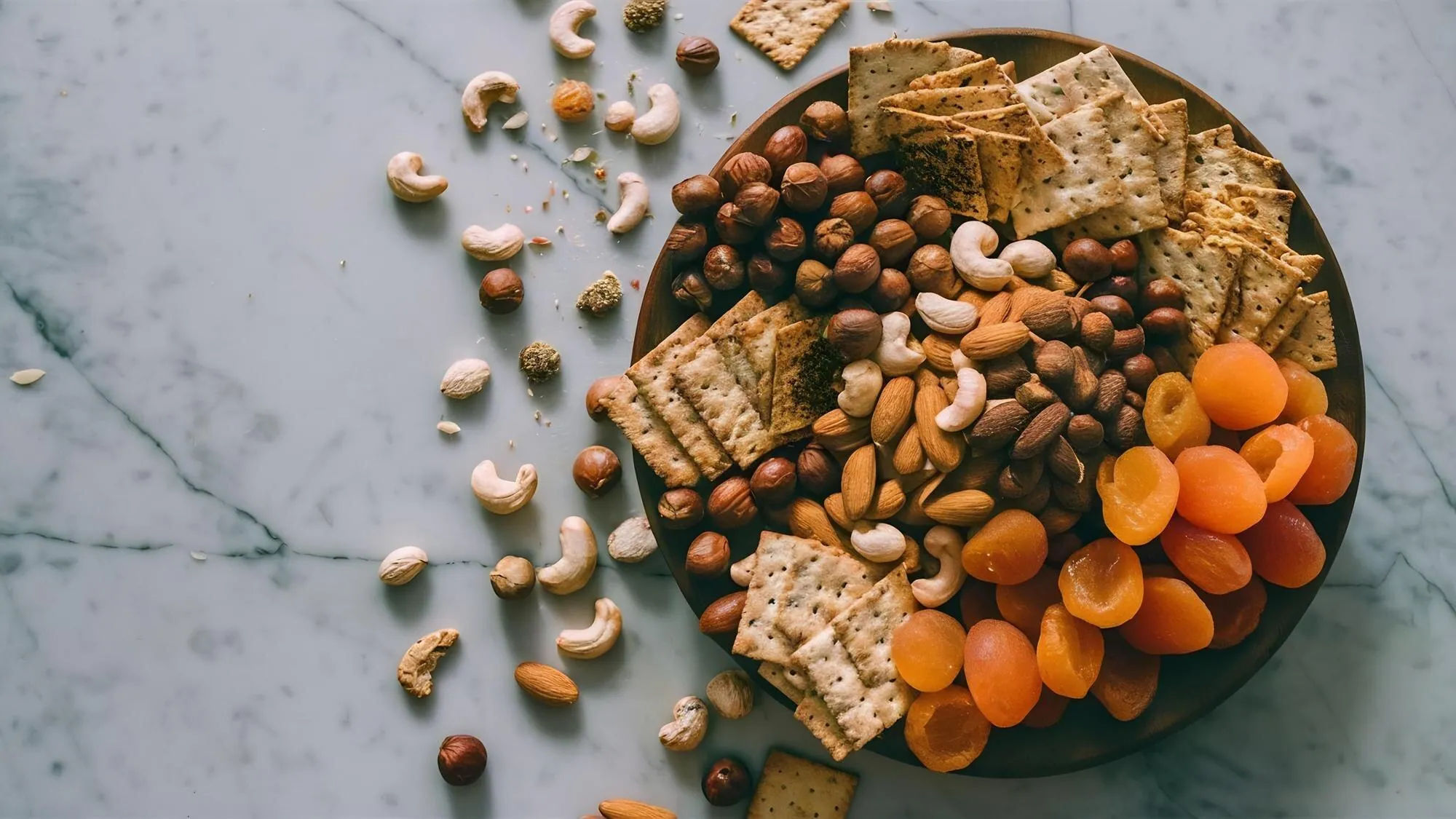
What to take on a train for 2 days: a food list
Mains
For day one: sandwiches or wraps with dry fillings, baked chicken pieces or meatballs, a grain or pasta salad without mayonnaise, savoury pies or pastries and boiled eggs eaten on the first day. For day two: canned fish or meat, hummus in a sealed single portion, bread, crispbread or flatbread and hard vegetables you can eat whole.
Breakfast and hot-water food
Instant oats in a jar with dried fruit, cup noodles, instant mashed potatoes, couscous, bulgur flakes, instant soup and tea or coffee sachets. Pre-measure each portion into its own bag or jar at home so you only add water on the train.
Snacks and fruit
Nuts and seeds, dried fruit, crackers, cereal or oat bars, biscuits, dark chocolate if the carriage is not hot, and firm fruit: apples, pears, oranges, bananas for day one. Pack crunchy vegetables such as carrots, cucumbers and sweet peppers; they hold up much better than leafy salad.
Drinks
Water is the priority. Plan about one large bottle per person per day as a starting point and refill where you can. Add tea bags, instant coffee and, for children, a drink they already like. Skip fizzy drinks in large bottles: they are heavy, sweet and easy to spill.
Use hot water if your train has it
What works with just boiling water
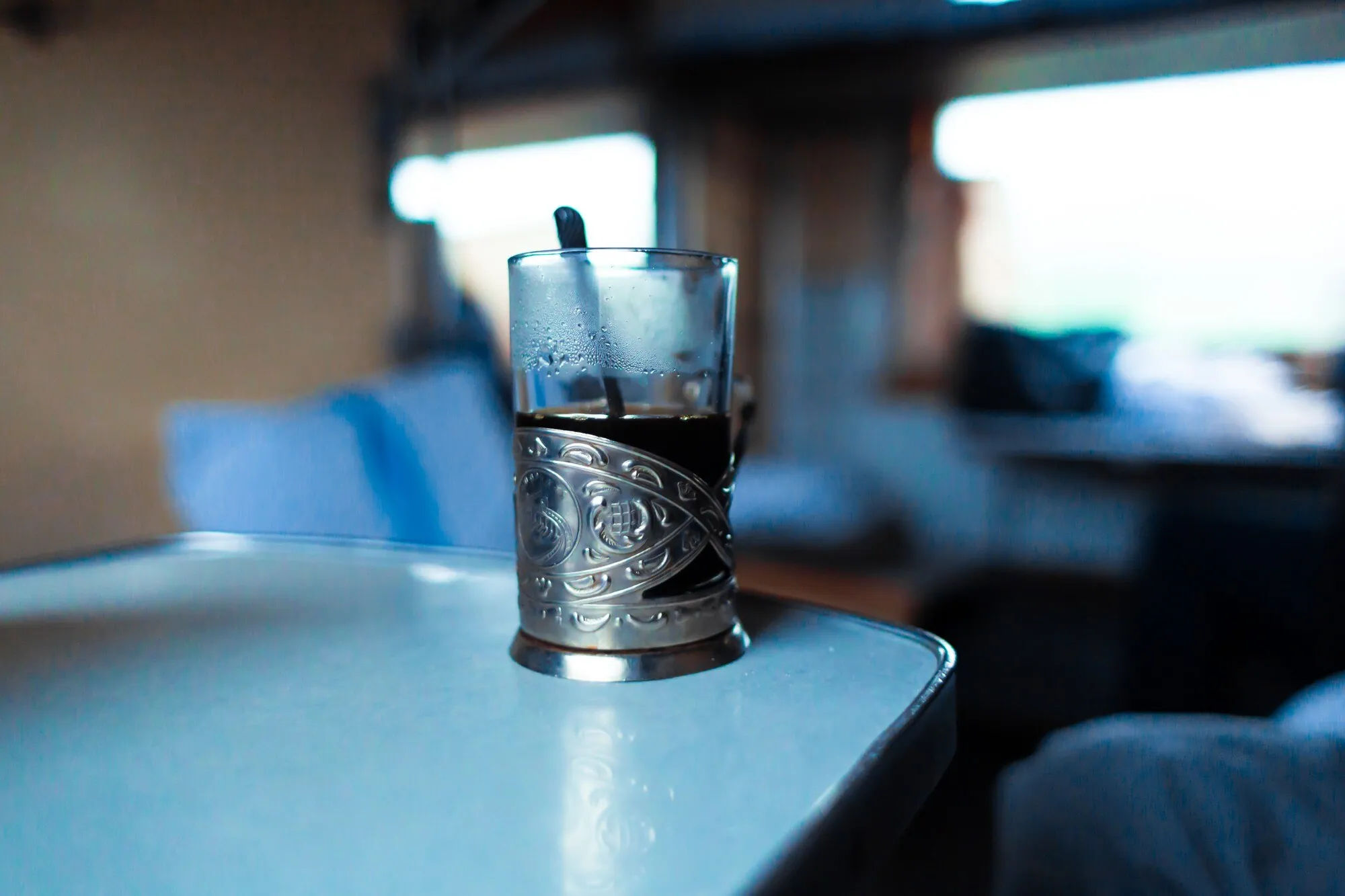
Many long-distance and sleeper trains have a hot-water boiler in each carriage, and on routes in Eastern Europe and Central Asia it is often a standard part of the trip. If yours does, you can have a warm breakfast and lunch on day two without carrying cooked food: instant oats with dried fruit, cup noodles, instant mashed potatoes, couscous with a stock cube, instant soup and plenty of tea.
Bring a mug with a lid or a heat-resistant jar, a spoon and a small towel. Pour carefully and close the lid before the train moves through bends and points. Let food stand for the time stated on the package before eating.
What to do if there is no hot water
Do not assume a boiler, microwave or dining car exists. Facilities and rules differ by railway, train and class. For example, Amtrak lets passengers bring their own food but says staff cannot heat or refrigerate it. Check the official page for your operator before you shop.
If there is no hot water, shift the plan: more bread, canned fish or beans, crackers, fruit and nut butter, and fewer instant products. A wide-mouth vacuum flask filled with boiling water at home stays hot enough for tea or instant oats for several hours, which covers the first evening.
How to pack food for a 2-day train trip
Pack by meal, in layers
Pack each meal in its own bag or container and stack them in the order you will eat them: day-one lunch on top, day-one dinner below it in the cool bag, day-two food in a separate bag. Put cutlery, napkins, wet wipes, a small cutting board, a folding knife if allowed, and two rubbish bags in an outer pocket. When you want lunch, you take out one bag, not everything.
Label the bags if you travel with several people. A small piece of tape with "Day 2 breakfast" saves you from eating tomorrow's food today.
Containers, cold sources and a "kit"
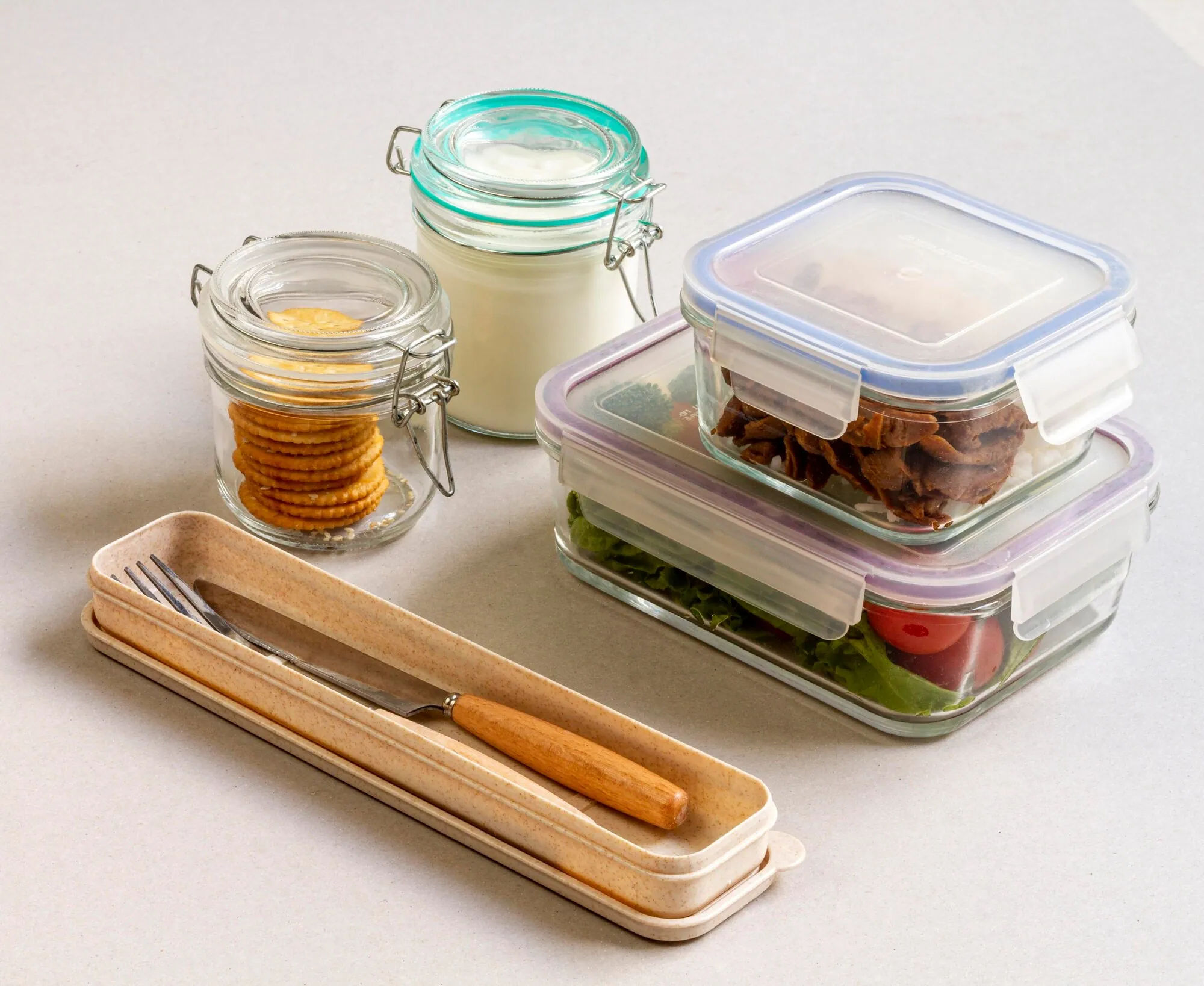
Use containers with locking lids and no leaks: the train will brake and sway. Put juicy food, sauces and cut fruit in the deepest containers and wrap sandwiches tightly. Freeze two ice packs or a bottle of water and place them next to the day-one food. Flat containers stack better on a small table than round ones.
A simple reusable kit makes repeat trips easier: one cool bag, three or four sealed containers, a mug with a lid, cutlery, wipes and bags. Keep it together at home so packing is just adding food.
What to avoid on a long train journey
Avoid mayonnaise-based salads, cream cakes, soft cheese, raw fish, rare meat and cut melon past the first few hours. Skip strong-smelling food such as dried fish, garlic-heavy dishes or very spicy sauces in a shared compartment. Leave out anything that crumbles everywhere, drips or needs a plate and a knife to eat.
Do not overpack either. Two days of food for two people is not a supermarket run. Perishable leftovers are a safety problem, and heavy bags are a nuisance in a narrow corridor.
A sample shopping list for two people
Use this as a starting point and adjust it to your timetable:
Day 1: 4 sandwiches or wraps, 1 container of grain or pasta salad, 6 pieces of baked chicken, 4 boiled eggs, cucumbers and cherry tomatoes.
Day 2: 4 portions of instant oats, 2 cup noodles, 2 small cans of fish or beans, 1 loaf of bread or pack of flatbread, 1 pack of crackers.
Fruit and vegetables: 4 apples, 4 bananas, 2 oranges, carrots and a cucumber.
Snacks: 1 bag of nuts, 1 bag of dried fruit, 4 cereal bars, biscuits.
Drinks: about 4 large bottles of water, tea bags, instant coffee.
Kit: 2 ice packs, napkins, wet wipes, rubbish bags, mug with a lid, cutlery.
For a shorter trip of a few hours, the food for a train trip guide has twelve one-meal ideas. If part of the journey is by car, see the road trip snacks guide.
Plan the trip menu in Dishday
If you take long trains regularly, save your travel meals in Dishday, put them on the travel days in the meal planner and send the ingredients to the grocery list, so cooking the day before departure is one shop and one evening. Keep a "2-day train" set you can repeat and adjust.
Dishday helps with the plan and the shopping. It cannot check the temperature in your bag, the rules of your railway or allergens in a product; those checks stay with you.
Frequently asked questions
What food should I take on a train for 2 days?
Take homemade food such as sandwiches, baked chicken and grain salad for the first day, and shelf-stable food for the second: bread, crackers, canned fish or beans, instant oats or noodles, nuts, dried fruit, whole fruit and vegetables. Add water and tea.
How do I keep food fresh on a 2-day train journey?
Cool cooked food completely before packing, use an insulated bag with two cold sources and eat perishable food on the first day. Cold packs do not last two days, so plan the second day around food that does not need a fridge.
What can I cook at home for a long train trip?
Baked chicken pieces, meatballs, savoury pies, boiled eggs, grain or pasta salads without mayonnaise and sturdy sandwiches travel well. Cook the evening before, cool everything in the fridge and pack it straight from the fridge.
What should I not take on a train?
Avoid mayonnaise salads, cream desserts, soft cheese, raw fish, strongly smelling food and anything that drips or crumbles. Check your operator's rules on alcohol, knives and glass before you pack.
Is there hot water on long-distance trains?
Many sleeper and long-distance trains have a hot-water boiler, especially in Eastern Europe and Central Asia, but not all of them. Check the operator's official information, and pack a backup plan that works with cold food only.
Pack the second day first
Start with the meals that are hardest to cover, breakfast and lunch on day two, and build the rest around them. Count meals, eat fresh food first, keep shelf-stable food for later and pack one bag per meal. To save the trip menu and turn it into one shopping list, download Dishday on the App Store.