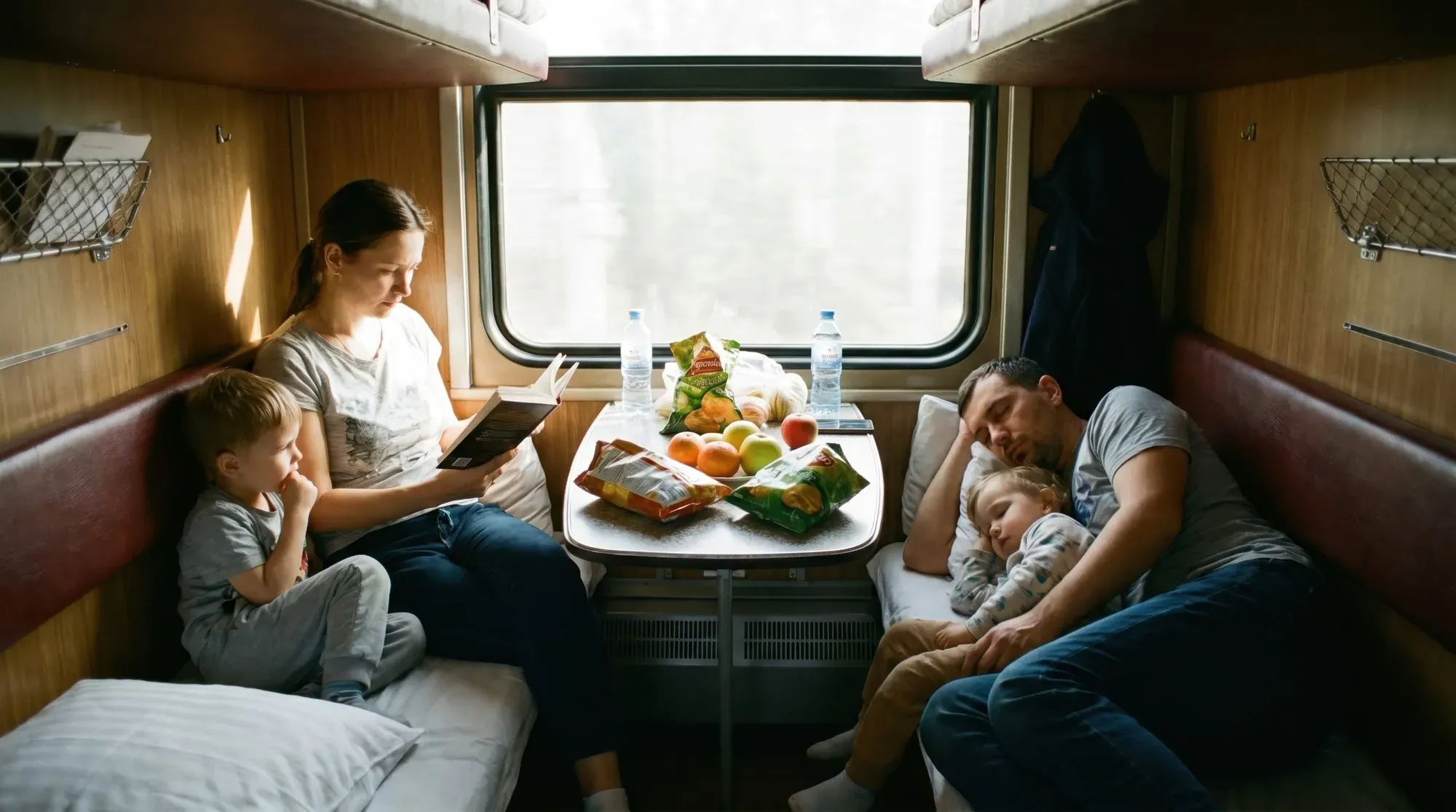

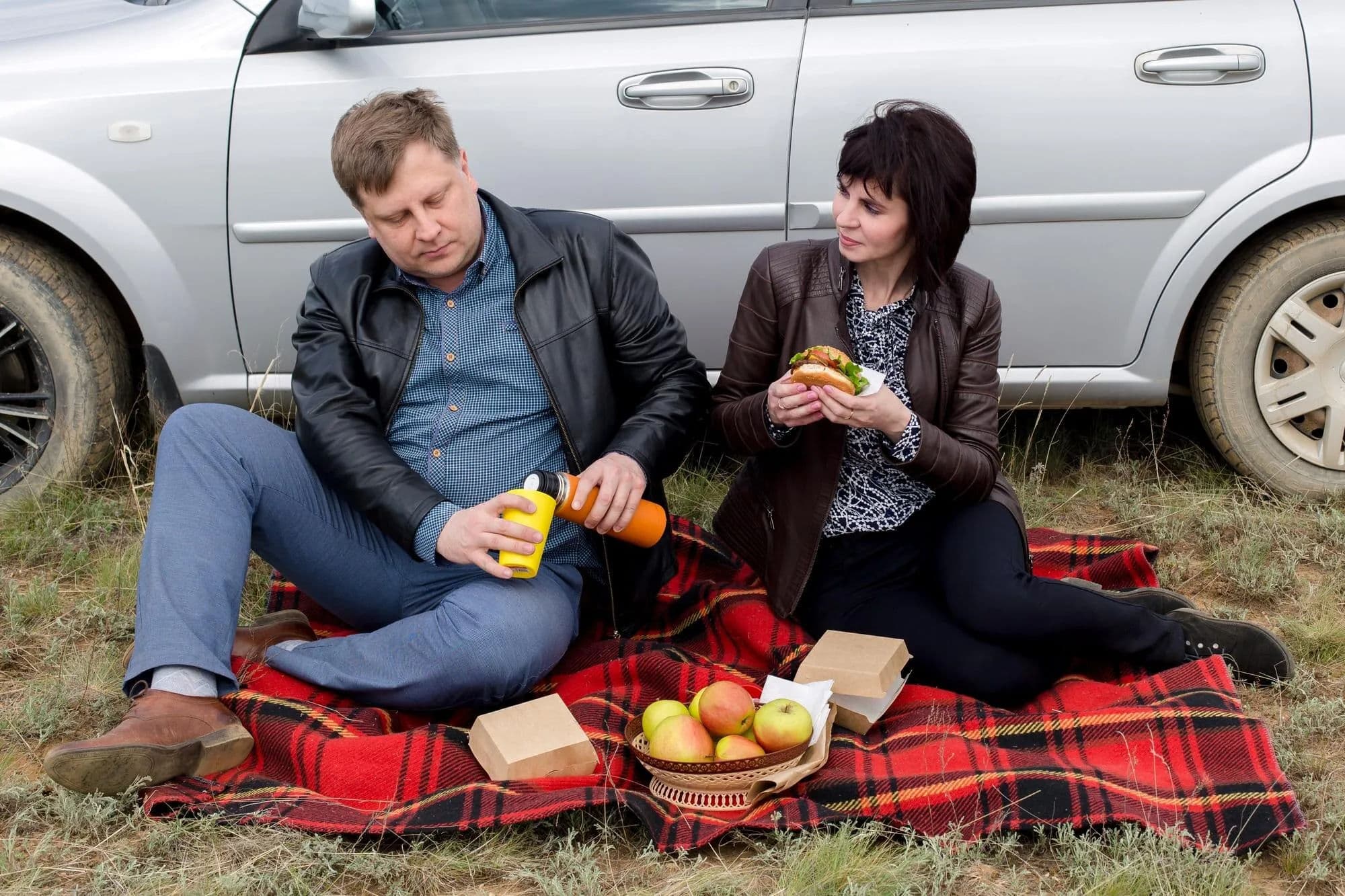
Good road trip snacks are easy to portion, easy to open while parked and sturdy enough to survive a warm car. Pack two crunchy choices, two filling choices, fruit or vegetables and water. Keep shelf-stable food in a small cabin bag, put perishables in a properly chilled cooler, and plan a real stop before the driver eats.
The goal is not a perfect collection of “healthy” snacks. It is a practical kit that matches the length of the drive, the travelers, the available cooling and the next real meal. The twelve ideas below are flexible formulas, so you can adjust them for allergies, age, budget and what is already in the kitchen.
What makes a road trip snack work
Choose low-mess food that can pause safely
A good car snack does not drip, shed a layer of powder or require a knife. Think bite-size portions, firm fruit, dry crackers, sandwiches cut into manageable pieces and dips reserved for a rest stop. Use resealable containers so unfinished food does not roll around the cabin.
Avoid anything that becomes difficult after one bite. An overfilled wrap or a tub that needs two hands may work at a picnic table but not in a moving vehicle. Schedule plate-and-napkin food for the next stop.
Pack for the trip, not for an imaginary emergency
Estimate how many snack breaks fit between departure and the next meal. One small choice every two or three hours is a useful starting point. Add one unopened shelf-stable backup for delays.
Variety matters more than volume. Pack one crisp option, one filling option and something fresh. Keep water reachable without unpacking the trunk.
12 road trip snacks for different setups
1. Apples, mandarins or firm pears
Whole fruit is the simplest no-refrigeration choice. Wash and dry it before leaving, choose fruit without bruises and pack it where bags cannot crush it. Mandarins need a peel bag; sliced fruit belongs in the cooler rather than a warm cabin.
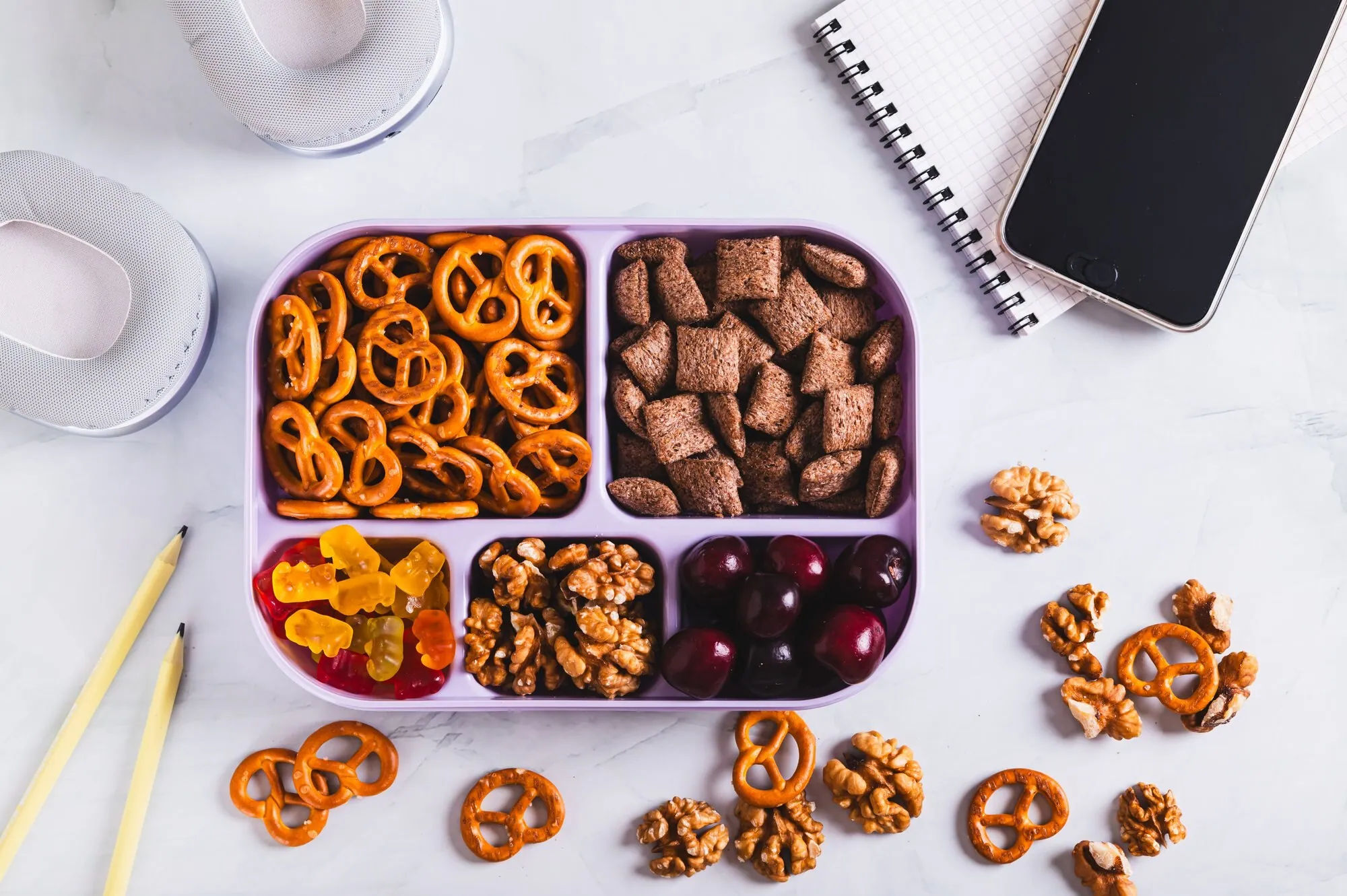
2. Pretzels, plain crackers or rice cakes
Choose a sturdy, lightly seasoned crunch and divide it into small containers to reduce crumbs and accidental overeating. Pair it with cooler cheese, a shelf-stable spread or roasted chickpeas when more food is needed.
3. Roasted chickpeas or broad beans
Crunchy roasted legumes travel well and provide a savory alternative to chips. Check the package for allergens and choose a seasoning that will not coat hands or seats. For younger children, use an age-appropriate softer option because hard round foods can be a choking risk.
4. Nuts or seeds with dried fruit
Make a simple mix from one unsalted or lightly salted nut or seed and one dried fruit. Keep pieces large enough to pick up cleanly, and portion each traveler’s serving separately. Use pumpkin or sunflower seeds only if they are suitable for everyone; do not present any mix as allergy-safe without checking every label and cross-contact warning.
5. Popcorn in individual bags
Air-popped or lightly seasoned popcorn is inexpensive and easy to prepare the night before. Use small bags that close, not an open bowl. Popcorn is not suitable for very young children, so substitute a soft snack that fits their age and eating skills.
6. Oat bars or homemade breakfast squares
Choose firm, low-crumb bars whose ingredients fit your travelers, and keep chocolate-covered versions out of a hot cabin. Add a clear allergen note to homemade oat squares shared outside your household.
7. Nut- or seed-butter packets with crackers
Single portions avoid an open jar and make the snack easy to count. Squeeze the spread onto a cracker while parked or at a table rather than handing a sticky packet around the moving car. Choose seed butter only after checking that it is appropriate for the specific allergy plan; “nut-free” is not a universal safety promise.
8. Shelf-stable tuna or bean kits
For a filling stop, pack an unopened pull-top tuna or bean pouch with crackers. Open it only where you have a bin, clean hands and time to sit. Separate fish allergens and discard opened leftovers that cannot stay safely cold.
9. Cheese sticks or cubes from the cooler
Pre-portion cheese into a sealed container and place it beside frozen gel packs. Take out only what will be eaten at the current stop, then close the cooler promptly. For a no-cooler trip, replace cheese with a genuinely shelf-stable packaged food and follow its label rather than guessing.
10. Hummus cups with carrots or mini peppers
Small sealed hummus cups reduce mess and make portions predictable. Keep hummus and cut vegetables cold, then eat them during a stop with clean hands. If sesame is an allergen concern, choose another dip and read the complete label because tahini is a common hummus ingredient.
11. Simple sandwich quarters
A basic sandwich can bridge a long gap between meals better than continuous grazing. Use firm bread, a modest amount of filling and no runny sauce; cut it into quarters and wrap portions separately. Most meat, egg, soft-cheese and moist sandwich fillings require reliable refrigeration.
12. Yogurt, overnight oats or chia cups
These are rest-stop foods, not steering-wheel foods. Pack each cup sealed and cold with its own spoon, then return unused cups to the cooler immediately. If the cooler cannot stay at a safe temperature, leave these at home and choose a shelf-stable formula instead.
Build a no-refrigeration snack kit
Use a six-part packing formula
For a medium-length drive, choose one item from each group: whole fruit, plain crunch, filling crunch, spread or pouch, optional small sweet and water. A sample kit might contain apples, pretzels, roasted chickpeas, seed-butter packets, oat bars and reusable water bottles. This is a packing template, not a nutrition prescription.
Put each type in a resealable container and give every traveler a small box or bag. Add napkins, moist towelettes and a rubbish bag that can close.
Portion before the car moves
Portioning at home makes allergens easier to separate and reduces spills. Label similar-looking foods when one passenger has a restriction.
Store the active snack bag within reach of a passenger, never where it can move under the driver’s pedals. Keep the backup in the trunk so boredom does not turn it into the first course.
Pack a cooler that stays reliably cold
Pre-chill food and monitor the temperature
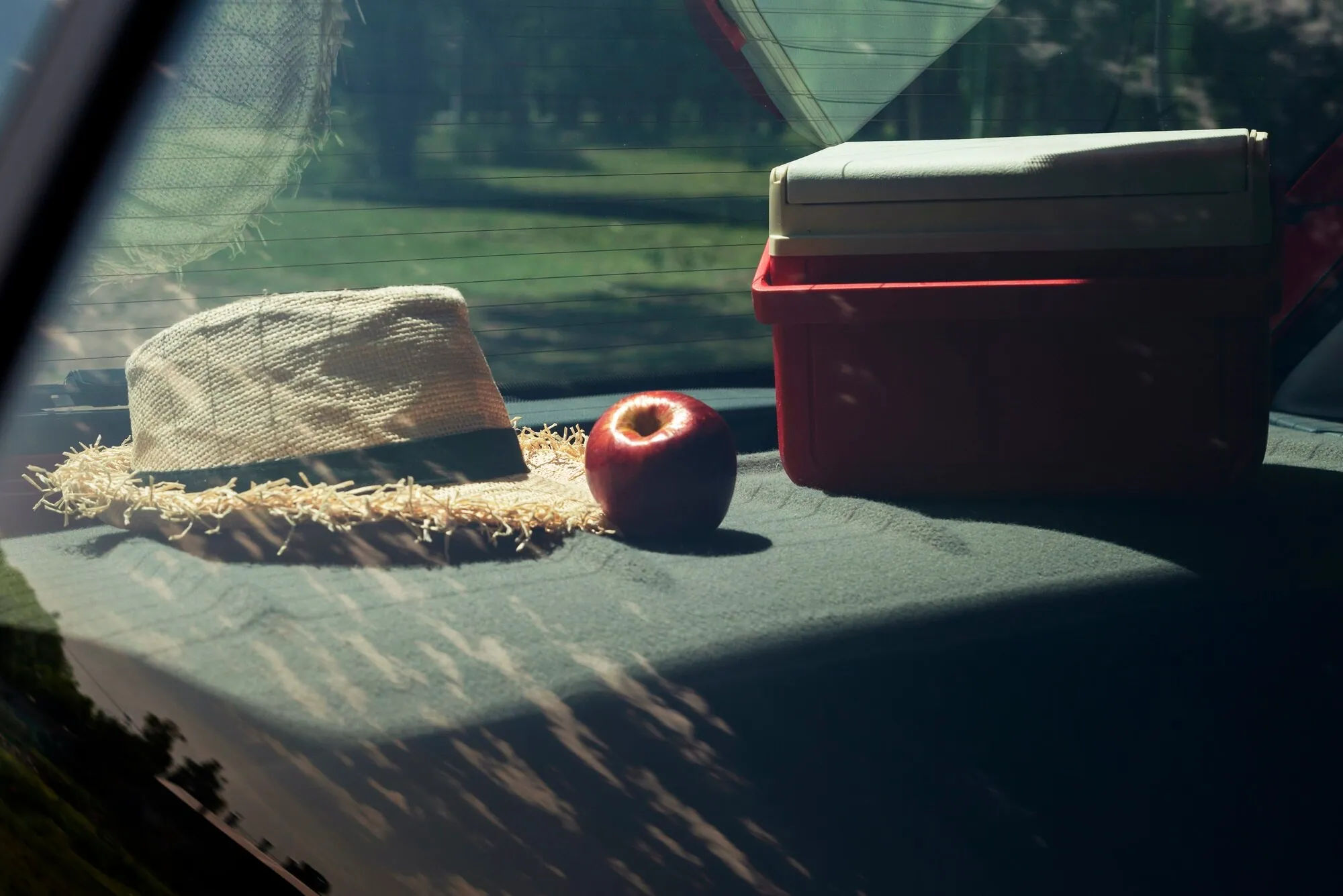
USDA guidance says perishable food should be packed directly from the refrigerator or freezer into a cooler with enough ice or frozen gel packs, and the cooler should stay at 40°F/4°C or below. An appliance thermometer makes that condition visible instead of leaving you to guess. Pack foods in the order they will be used and keep the cooler closed and out of direct sun.
For a long drive, USDA recommends considering two coolers: one opened frequently for the day’s drinks and snacks, and another for more perishable food needed later. See the official USDA road-trip guidance and outdoor food-safety guide.
Follow the two-hour rule, or one hour in high heat
USDA advises not leaving perishables above safe cold-holding temperatures for more than two hours, or more than one hour when the temperature is above 90°F/32°C. That limit applies to many sandwiches as well as dairy, cut produce and cooked foods. If the cooler has lost its cold source and you cannot verify safe storage, do not use smell or appearance as a safety test.
Take out one round of food, note the time and close the lid. Do not repeatedly return food that has warmed in the cabin to the cooler. Local guidance can differ, so use the rules for the place where you are traveling.
A complete snack plan for a six-hour family drive
Pack two planned breaks and one backup
For two adults and two school-age children, a workable starting plan is four portions of fruit, four small crunchy portions, four filling portions such as chickpeas or bars, four cold sandwich quarters or cheese portions, plus water. Serve fruit and crunch at the first stop, then the cold and more filling items at a later meal stop. Keep one sealed packet of crackers or bars as the delay backup.
Change the quantities for appetite, age, medical needs and the meals before and after the drive. The point is to assign food to a break before leaving, not to turn a six-hour drive into six hours of grazing.
Make the stop part of the food plan
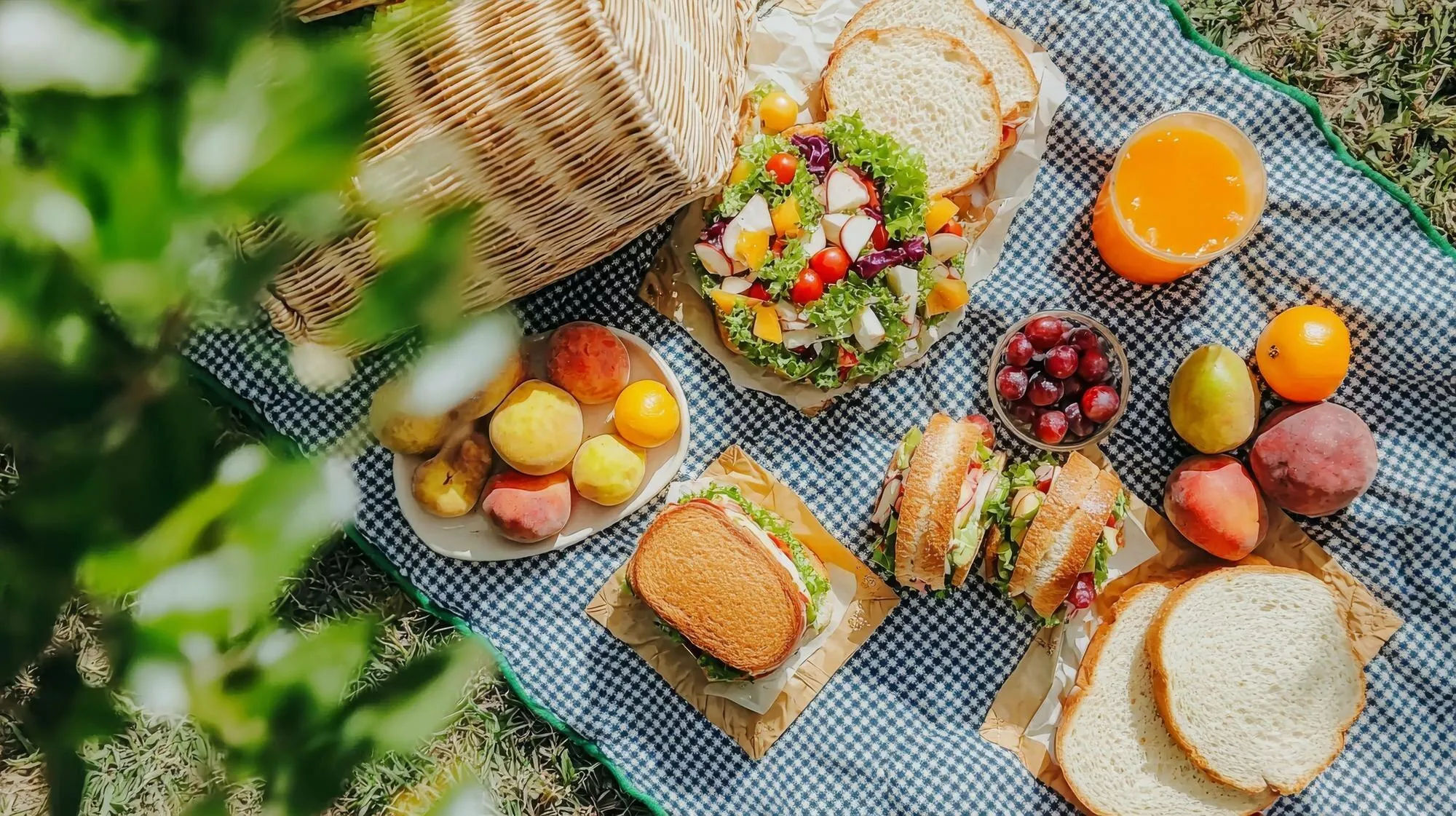
Choose a safe stopping point before the trip. A ten- or fifteen-minute stop lets everyone use both hands, clean up and notice whether they are actually hungry while keeping messy food away from driver attention.
Check allergies, age and driver safety
Keep labels and separate restricted foods
Ask about allergies before shopping and keep original labels or photos of them. The FDA identifies nine major allergens in the US: milk, eggs, fish, crustacean shellfish, tree nuts, peanuts, wheat, soy and sesame. Use separate containers and clean hands, but do not promise that repacking at home removes cross-contact risk; read the official FDA food-allergy guidance.
Match shape and texture to the eater. Whole nuts, popcorn, hard round foods and large sticky pieces may be inappropriate for young children or anyone with chewing or swallowing difficulty. Follow pediatric or clinical advice that applies to your traveler instead of relying on a generic snack list.
The driver should eat only while parked
NHTSA includes eating and drinking among activities that divert attention from driving. Choose a safe place to stop before the driver unwraps or eats anything; passengers can manage water, wrappers and snack distribution. Read the current NHTSA distracted-driving guidance and follow local road rules.
Save a repeatable road trip list in Dishday
Once the kit works, save the homemade bars, sandwich formula or snack boxes as recipes and place them on the departure day in the Dishday meal planner. Add fruit, dry snacks, cooler items, ice packs and water to the grocery list. For more no-reheat combinations, adapt the cold lunch ideas; for an early departure, add one of the quick breakfast ideas.
Dishday can organize the recipes and shopping, but it cannot confirm food temperature, allergy safety, choking suitability or a safe place to stop. Those checks remain with the traveler.
Frequently asked questions
What are the best snacks for a road trip?
The most practical choices are firm whole fruit, pretzels or crackers, roasted chickpeas, portioned nuts or seeds, oat bars and a filling cooler item when safe refrigeration is available. Choose foods that match your travelers and can be opened while parked without dripping or scattering crumbs.
Which road trip snacks do not need refrigeration?
Whole fruit, dry crackers, pretzels, roasted legumes, unopened nut or seed butter, many dried fruits and some packaged bars are commonly shelf-stable before opening. Always follow the product label; homemade foods and opened pouches may have different storage requirements.
How much food should I pack for a long drive?
Plan around the time to the next real meal and schedule one small snack break every two or three hours as a starting point. Pack one portion per person for each planned break and one unopened shared backup for delays. Adjust for age, appetite and medical needs.
How do I keep sandwiches cold on a road trip?
Chill them fully before departure, seal individual portions and pack them directly beside frozen gel packs in a cooler that stays at 40°F/4°C or below. Use a cooler thermometer, keep the lid closed and follow the USDA two-hour or high-heat one-hour limit when cold holding is lost.
What are low-mess road trip snacks for kids?
Try age-appropriate pieces of firm fruit, soft bars, small crackers, sandwich quarters or a chilled yogurt eaten during a stop. Avoid foods that do not match the child’s chewing skills, and keep allergen labels available. An adult passenger should handle containers so the driver stays focused.
Pack the next trip with less guesswork
Choose six categories, assign each snack to a planned stop and leave one backup sealed. Pack perishables cold, keep the driver’s hands on the driving task and save the combination that worked. To keep the recipes, departure-day plan and grocery list together, download Dishday on the App Store.