
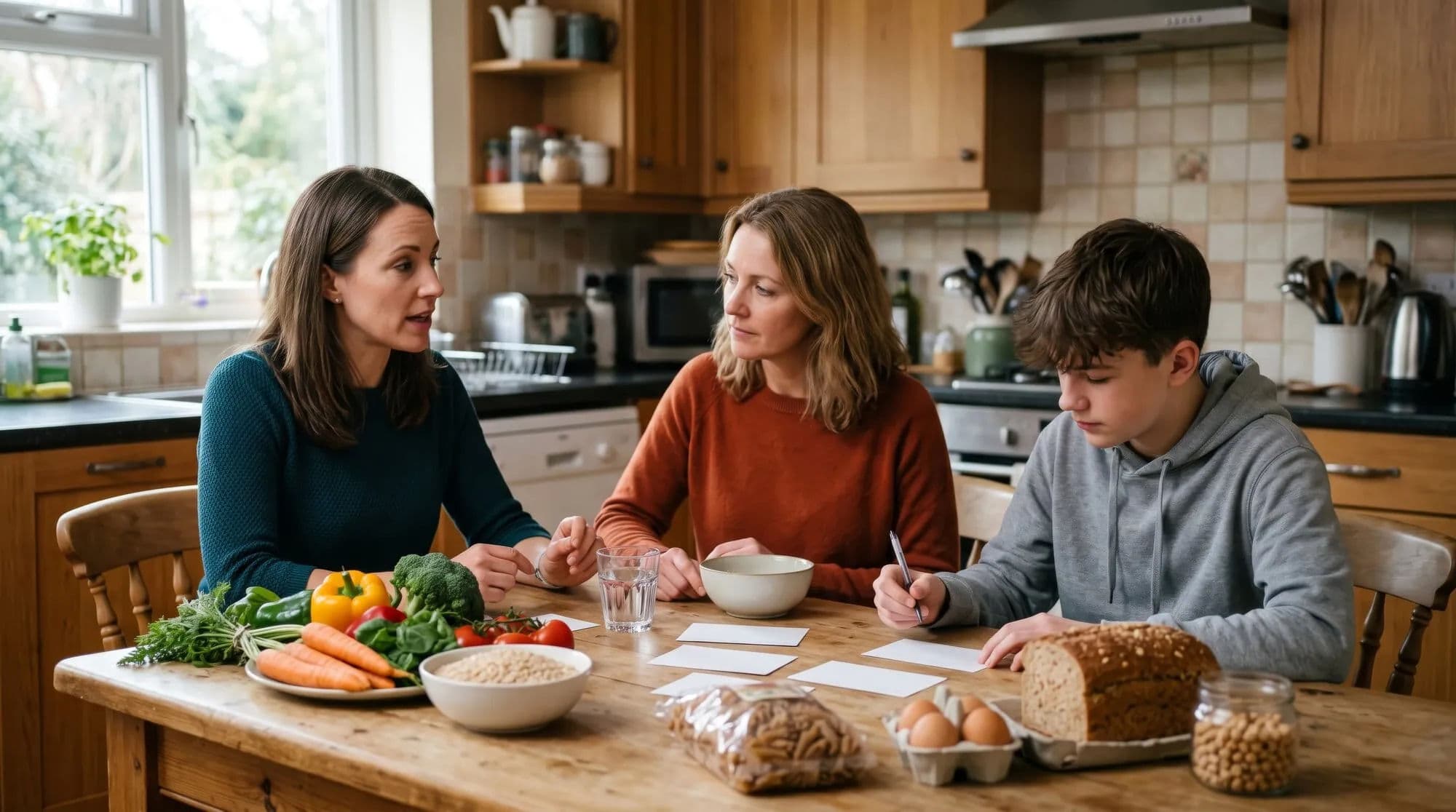
You can plan five family dinners in 30 minutes by deciding the shape of the week before choosing recipes. Spend five minutes checking the calendar and food already at home, ten minutes choosing five dinner formats, ten minutes assigning ingredients and portions, and five minutes turning the result into a grocery list.
The goal is not five impressive, unrelated recipes. It is five dinners that fit the people, time and energy available. Use two or three ingredients more than once, place the most demanding meal on the easiest evening, and keep one pantry or freezer option ready for a changed plan.
The 30-minute family dinner planning method
Set one timer and use four short rounds. Do not browse recipes until you know what the week requires.
Minutes 0–5: map the real week
Write Monday through Friday and answer three questions for each evening:
Who will actually be home?
How much active cooking time is realistic?
Does anyone need a packed portion, later plate or different component?
Mark one easy night, two ordinary nights, one late or uncertain night, and one flexible night. If Wednesday has sports practice and Thursday has a late meeting, do not place your two longest recipes there. A useful plan follows the calendar rather than asking the family to follow an idealized menu.
Minutes 5–15: choose five dinner formats
Choose formats before exact recipes. Reliable formats include a sheet-pan dinner, tacos or wraps, pasta, bowls, soup with bread, eggs with vegetables, or a freezer meal. Formats reduce choice without forcing everyone to eat the same combination.
Assign one format to each evening. Limit yourself to one genuinely new recipe during a busy week. Familiar meals are not a planning failure; they are the stable parts that make one new idea manageable.
Minutes 15–25: connect ingredients and portions
Circle ingredients that can work in at least two dinners. Roasted peppers can fill tacos and top grain bowls. Cooked chicken can appear first with vegetables and later in wraps. Spinach can go into pasta and an omelet.
Then count portions by evening. Four people home on Monday does not automatically mean four portions: you may want five if one becomes Tuesday lunch, or three if a family member eats elsewhere. Write the intended number beside every dinner before calculating groceries.
Minutes 25–30: build the list and name the backup
Check the refrigerator, freezer and pantry, then list only what is missing. Group the list by produce, protein, dairy, pantry and frozen foods so repeated ingredients appear once with a total quantity.
Name one backup made mostly from food already on hand, such as tomato pasta, bean quesadillas, eggs on toast or frozen soup. The backup protects the plan when the schedule changes. It should not require a second full basket of “just in case” groceries.
Start with constraints, not requests for five meals
Asking everyone “What do you want this week?” often produces a wish list that does not fit the calendar. Ask smaller questions instead:
Which evening will be hardest?
Is there one meal someone definitely wants?
Which food needs using first?
Are there allergies, dietary needs or strong dislikes to accommodate?
Which component can stay separate for different preferences?
The USDA MyPlate family eating guidance recommends planning meals before the week begins and involving children in meal preparation. Participation can be modest: one person chooses the pasta shape, another washes vegetables, and someone else picks Thursday's sauce. Adults still keep the plan realistic and handle safety decisions.
Use a five-format grid to avoid decision fatigue
A grid makes variety visible without requiring five unrelated shopping lists.
One-pan meal: protein or beans, two vegetables and a simple seasoning.
Build-your-own meal: tacos, wraps, bowls or baked potatoes with components served separately.
Fast familiar meal: pasta, noodles, eggs or a family staple.
Planned transformation: reuse a safe cooked component in a different format.
Low-effort finish: soup, freezer food, sandwiches or another backup.
This is a framework, not a nutrition prescription. Adjust it for culture, budget, dietary needs and the age of the people eating. If one format does not suit your household, replace it with a dependable equivalent.

Plan components when preferences differ
Trying to plan five completely separate dinners for different preferences creates extra work. Instead, separate the meal into a shared base and optional finishes.
For tacos, place beans or meat, vegetables, cheese, salsa and tortillas on the table separately. For bowls, keep the grain, roasted vegetables, protein and sauce in separate containers. For pasta, reserve a portion before adding a sauce someone dislikes.
This does not guarantee that every preference can share every meal. Allergies and medically required diets need proper separation and professional guidance where relevant. The practical aim is to identify safe shared components without treating a preference as a surprise at serving time.
Reuse ingredients without repeating the same dinner
Ingredient overlap saves planning time only when the second use feels intentional. Reheating the identical plate three nights in a row may not suit the household, while changing the format can make the same component useful.
Choose two “bridge” ingredients:
a cooked protein or bean that can move from a tray dinner to wraps;
a roasted vegetable that can move from a side dish to pasta or bowls;
a grain that can become a base, a side or a filling;
a sauce that can dress two different meals.
Do not force overlap with fragile ingredients the family may not finish. The EPA's current wasted-food prevention guidance advises planning around meals expected at home, checking existing food and writing quantities on the shopping list. Those habits matter more than buying a larger package because its unit price looks lower.
A practical five-dinner example
Imagine a four-person household with one late evening, one vegetarian preference and 30 minutes or less for active cooking most nights.
Monday: sheet-pan chicken, chickpeas and vegetables
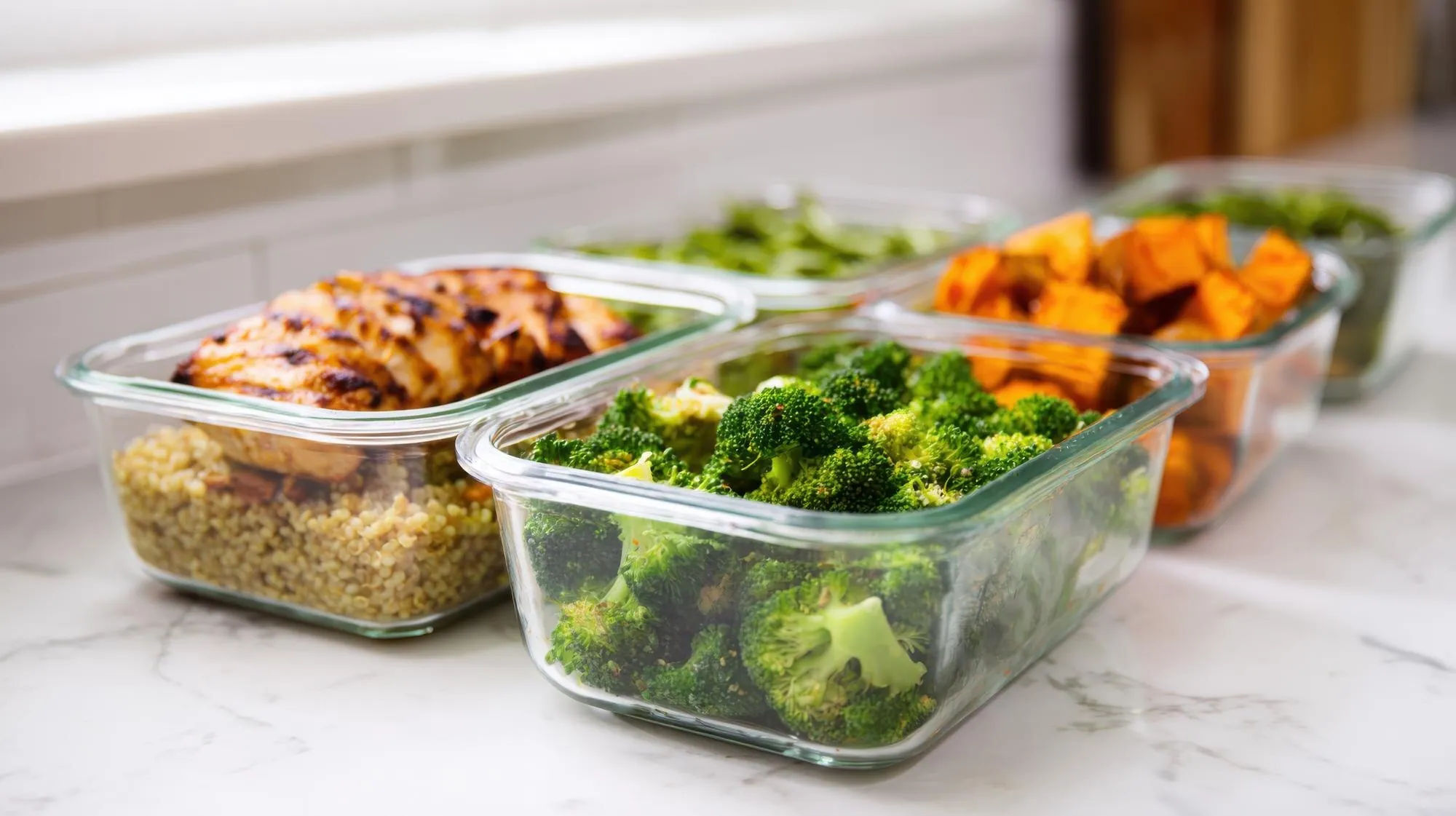
Roast chicken on one side of the pan and seasoned chickpeas on the other, with peppers and zucchini between them. Make enough chicken, chickpeas and vegetables to reserve separate portions for Thursday. Keeping the components separated makes the vegetarian option clear.
Tuesday: bean tacos with crunchy toppings
Warm beans and tortillas. Serve cabbage, tomato, cheese, salsa and any suitable roasted peppers separately. This is the easy evening because most work is assembly.
Wednesday: tomato-spinach pasta
Cook pasta with tomato sauce and spinach. Add cheese at the table. Make only the portions needed unless a leftover lunch is already planned.
Thursday: build-your-own grain bowls
Reheat the reserved chicken, chickpeas and vegetables safely, and serve them over a grain with a simple sauce. Each person chooses the components that work for them. This is the late-evening meal because the main parts are already cooked.
Friday: vegetable omelets and toast
Use remaining spinach, peppers or cheese in omelets, or make scrambled eggs if that is easier. Keep a bean-and-toast or freezer alternative for anyone who does not eat eggs.
The example is deliberately ordinary. Its strength is the shared ingredients and realistic order: prep happens when there is more time, then later meals become easier.
Put the right dinner on the right night
Rank the five dinners from most to least active work. Then match them to the week rather than keeping the order in which you found them.
Place new recipes and large batches on evenings with the most margin. Put assembly meals on late evenings. Schedule planned leftovers soon enough to use them safely. Keep the backup for the day most likely to change.
If a meal repeatedly fails on a certain night, change the format. The answer may be a cold plate, prepared component or freezer meal—not trying to cook faster under the same constraints.
Handle planned leftovers safely
Planning a second use does not extend the safe storage time. USDA FSIS says to refrigerate perishable leftovers within two hours, use shallow containers for rapid cooling, and generally use refrigerated leftovers within three to four days. Reheat leftovers to 165°F (74°C). Follow the full USDA leftovers and food safety guidance for cooking, cooling, storage, thawing and reheating.
Label reserved components with the date and their planned second meal. Freeze them promptly when the plan moves beyond the safe refrigerator window. When food looks or smells questionable, or you are unsure how it was handled, discard it; a meal plan is never a reason to take a food-safety risk.
How Dishday can support the family dinner plan
Paper, a notes app or a whiteboard can run this method. If you want the plan, recipes and shopping list connected, the Dishday meal planner can keep dinners in one weekly view, while the grocery-list feature helps combine missing ingredients.
Dishday's current App Store listing describes family meal planning, recipe saving and a grocery list. You still need to confirm who is home, review quantities, check allergies and make food-safety decisions. The useful role of the app is reducing repeated copying after you have made those judgments.
For a lighter schedule-first approach, use the simple weekly dinner plan. When the dinners are settled, follow the guide to make one grocery list from the meal plan.
Check the plan before shopping
Read the finished week once from Monday to Friday:
Does every dinner fit the time available that evening?
Is there at most one unfamiliar recipe?
Does every perishable ingredient have a first use and, when needed, a second use?
Are portions based on who will be home?
Can different preferences be handled safely with shared components?
Is the backup already in the pantry or freezer?
Are planned leftovers scheduled within safe storage limits?
If two answers are no, simplify now. Replace one recipe, remove one perishable extra or move the most demanding dinner. Five achievable meals are more useful than a perfect-looking plan that collapses on Wednesday.
Frequently asked questions
How many dinners should I plan for a family each week?
Plan only the dinners that groceries must cover. Five is a useful weekday structure, but subtract meals away from home and add only intentional leftover or freezer nights. The correct number follows your calendar.
Can I really plan five family dinners in 30 minutes?
Yes, if the 30 minutes are for planning rather than browsing unlimited recipes. Map the week, select formats, connect ingredients, calculate portions and write the missing groceries. Save deeper recipe research for the one unfamiliar meal.
How do I plan when family members like different foods?
Use meals with separate components, such as tacos, bowls, potatoes or pasta with toppings added at the table. Confirm allergies and dietary requirements first; shared components are useful only when preparation and serving are safe.
Should I cook all five dinners during meal prep?
No. You can prep only the components that remove later work: wash vegetables, cook a grain, mix a sauce or cook one protein. Leave foods that lose quality quickly for the day they are served.
What if the family dinner plan changes midweek?
Move the most perishable meal earlier, freeze safe unused components when appropriate and use the named backup. Do not buy another complete dinner before checking whether the existing plan can be rearranged.
What is the easiest way to turn the plan into a grocery list?
Write the portion count beside each dinner, total repeated ingredients, subtract food already at home and group the remaining items by store section. Whether you use paper or an app, keep quantities visible.
Your next 30 minutes
Open the household calendar, set a timer and write five dinner formats before searching for recipes. If you want one place to keep the plan and list together, download Dishday on the App Store after the practical plan is complete.