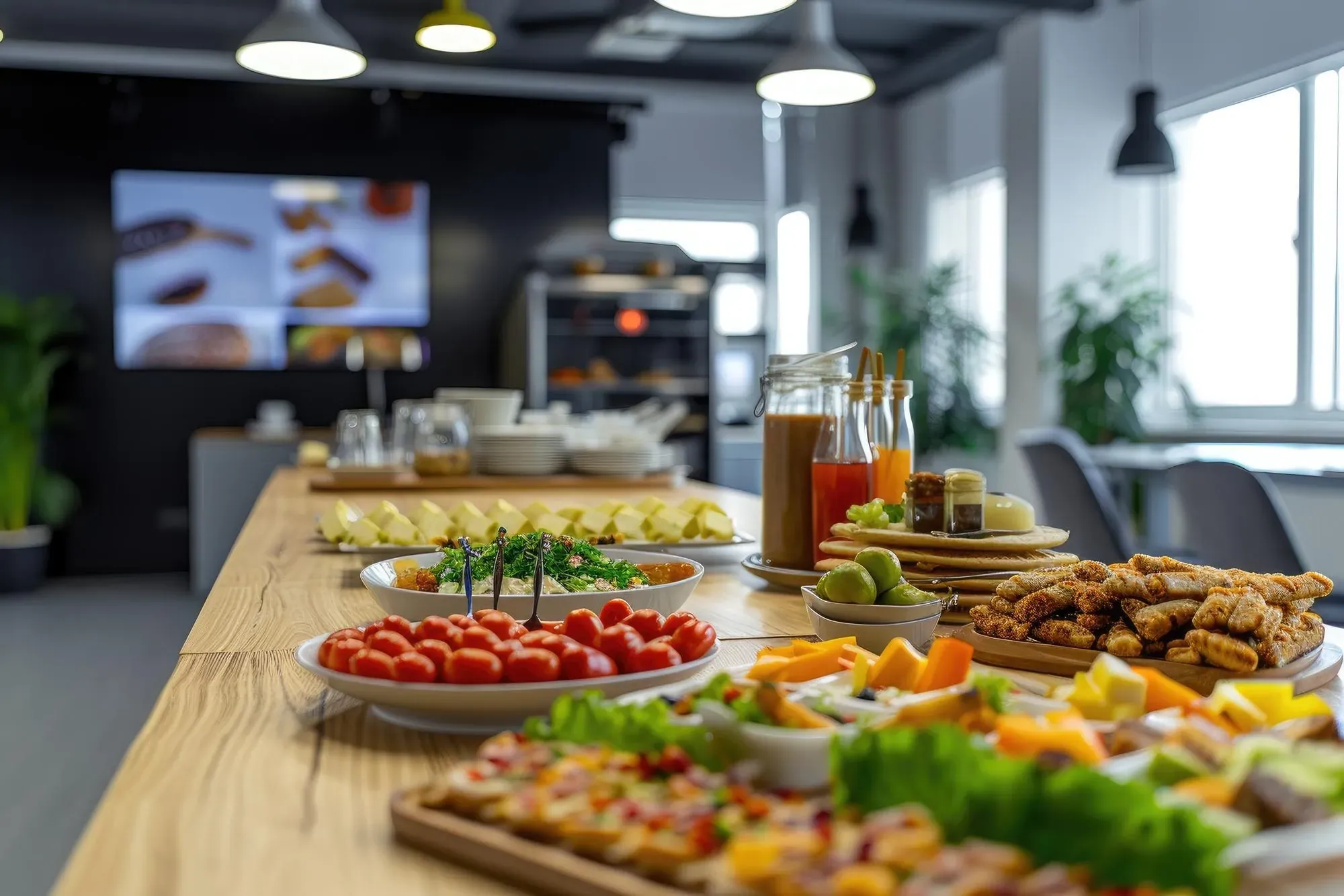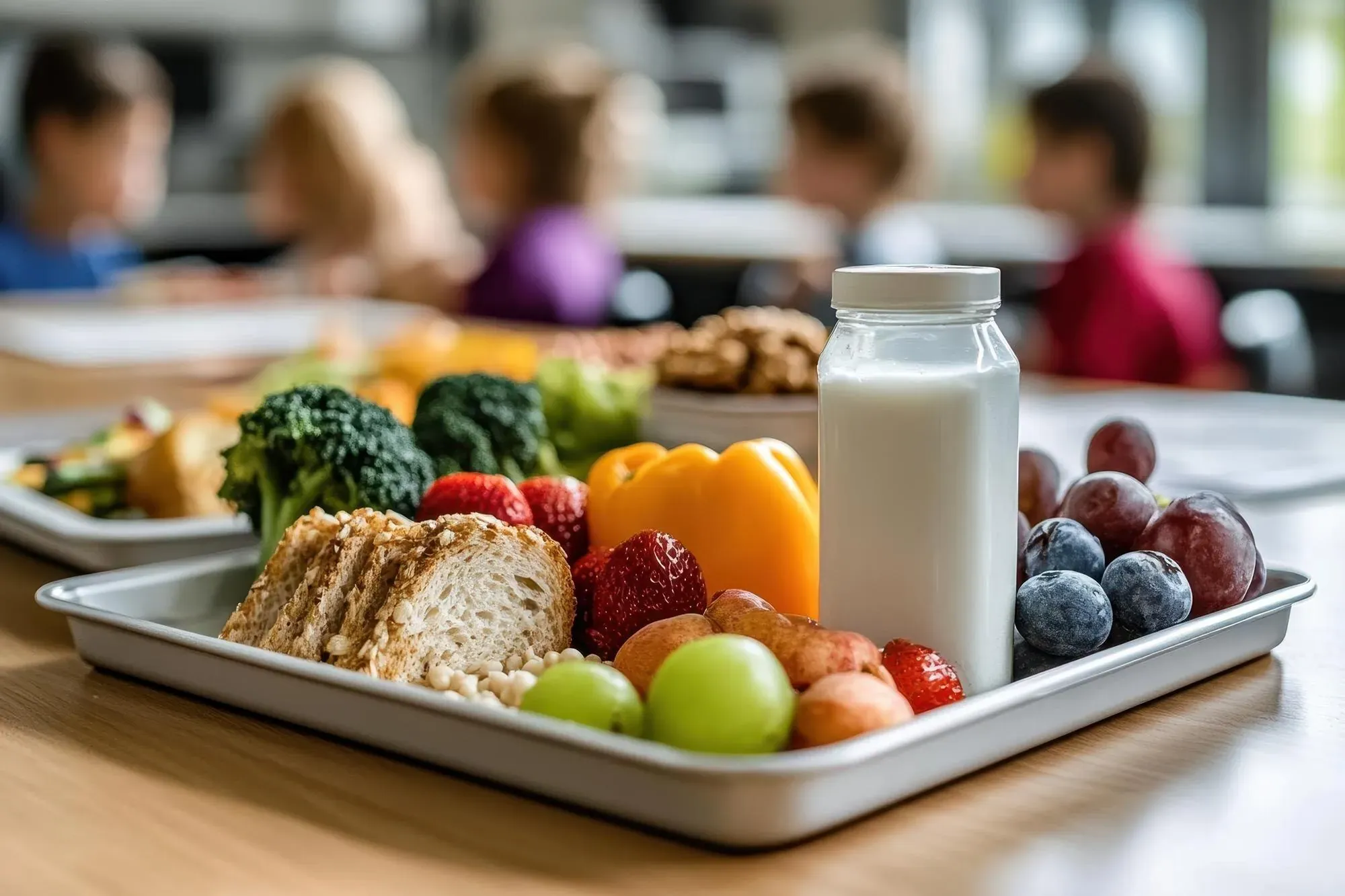

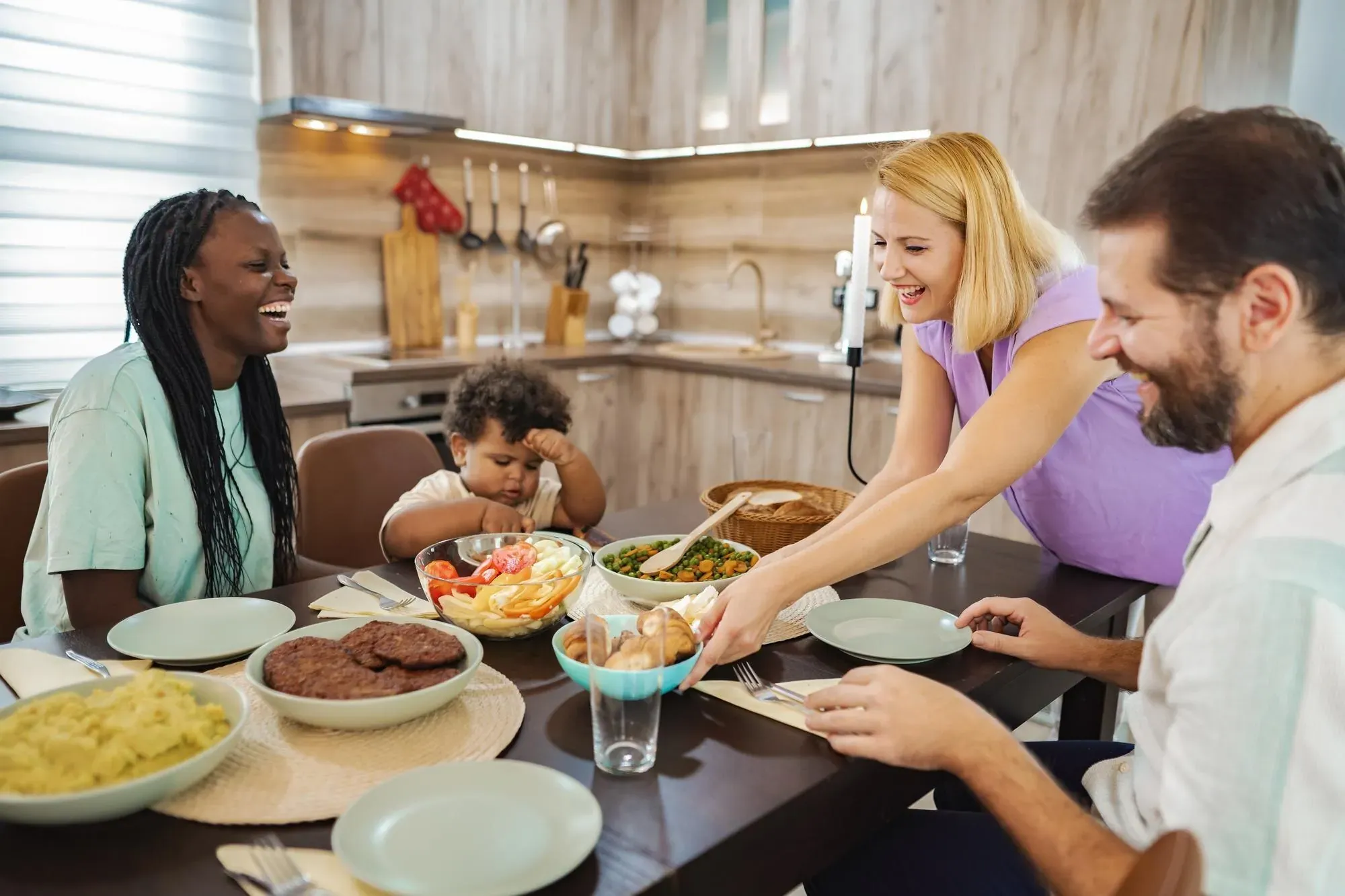
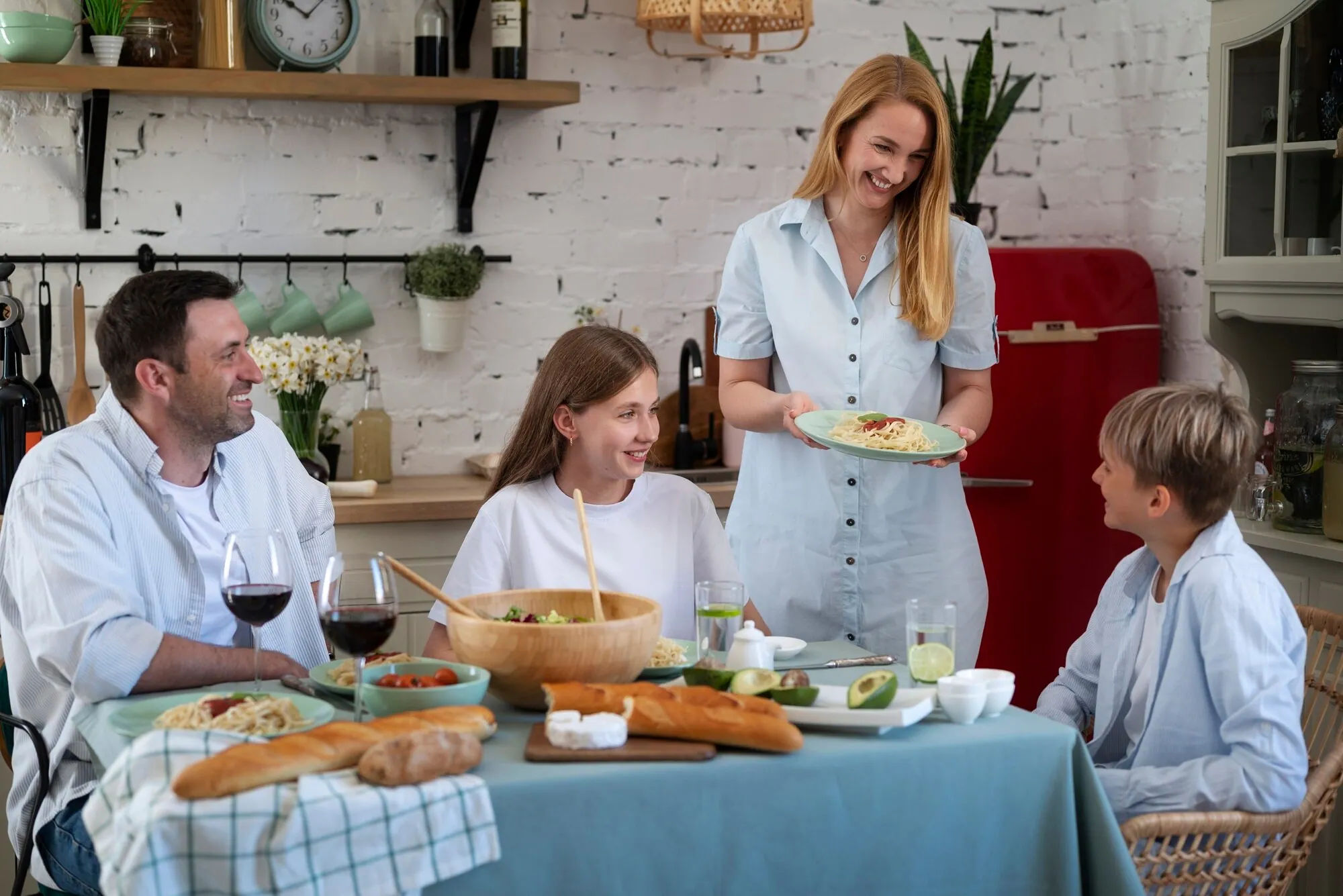
The easiest dinner for a picky family is usually one flexible meal, not several separate meals. Cook a shared base, keep the most divisive flavors and textures in separate bowls, include one familiar component, and let each person assemble a plate. Think taco bowls, pasta with sauce on the side, baked potatoes with toppings, or a tray of chicken and vegetables that can be served separately.
This method does not require everyone to eat the same combination. It means the household shares most of the shopping and cooking while each plate can look different. Preferences can stay optional; allergies, medically required diets and food-safety rules need stricter boundaries.
Decide what “one dinner” means in your home
Share the cooking, not an identical plate
A shared dinner can use the same rice, chicken, vegetables and sauces while producing four different bowls. One person may want everything mixed, another may prefer plain rice and chicken, and another may choose beans instead of meat. The cook still prepares one set of components.
This is different from making one casserole and hoping everyone accepts it. Mixed dishes are efficient when tastes overlap, but difficult to adjust after the ingredients are combined. A flexible dinner delays the final combination until the table.
Choose the non-negotiable boundary before you start
Decide how much variation you can support tonight. A useful rule is: one base, one main protein or filling, one vegetable or fruit, and no more than two optional finishes. If someone rejects the main combination, the familiar component is the fallback; you do not start a second full recipe after dinner is served.
The boundary should match the household. A toddler, a vegetarian adult and a person with a food allergy do not create the same planning problem. Preferences may be handled by serving components separately. An allergy may require separate utensils, surfaces, packages or an entirely separate preparation path.
Build dinner from five practical parts
Start with a neutral base
Choose a base that at least several people can eat: rice, pasta, potatoes, bread, tortillas, couscous or another household staple. Season it enough to taste good, but keep intense heat, strong sauces and crunchy garnishes for the table.
Make only one base unless a real dietary need rules it out. If two bases are necessary, choose a low-work pair such as rice plus tortillas or potatoes plus bread rather than two recipes that need separate pans and timing.
Add one main component that can stay separate
Use roasted chicken pieces, meatballs, beans, lentils, baked tofu, fish, eggs or another filling that can be portioned without coating the entire meal. If you need meat and plant-based options, use the same seasoning family and cook them on clearly separated areas or in separate pans as appropriate.
Keep the main component simple enough to reuse. Plain roasted chicken can join a mild bowl, a spicy wrap or tomorrow’s lunch; chicken already mixed into a rich sauce has fewer exits.
Offer one produce component and two finishes
A vegetable or fruit can be raw, roasted, steamed or served in more than one texture only if the extra work is small. For example, put sliced cucumber on the table and roast carrots with the main dish. Do not turn the meal into a buffet of six sides.
Use finishes to create contrast: a sauce and a crunchy topping, grated cheese and herbs, yogurt and chili oil. Put the divisive item on the side. One optional sauce often creates more useful variation than cooking another main dish.
Include a familiar component without making it the prize
For children with ordinary picky-eating behavior, USDA MyPlate and the American Academy of Pediatrics both recommend calm family meals, familiar foods alongside less familiar foods, and participation in preparation. The USDA picky-eater tips advise serving the same meal to adults and children, while HealthyChildren.org suggests including a food the child enjoys beside one previously refused.
The familiar component might be plain rice, bread, cucumber, yogurt or part of the main dish before sauce is added. Serve it as a normal part of dinner, not as a reward for tasting something else.

Use six formats that tolerate different preferences
Choose a format before choosing a recipe
These dinner formats separate naturally and can reuse the same five-part formula:
Taco or wrap night: tortillas, one filling, sliced vegetables, cheese and sauce.
Rice or grain bowls: a neutral base, protein, vegetables and two finishes.
Pasta night: pasta, sauce on the side, one protein and a simple vegetable.
Sheet-pan dinner: keep ingredients in separate zones and serve sauces at the table.
Baked potatoes: one hot base with beans, leftover protein, vegetables and toppings.
Flatbread or mini pizza: one dough or bread base with individually chosen toppings.
The format is the reusable decision. The recipe is only this week’s version. Once a household knows that bowls or wraps work, you can change ingredients without redesigning dinner.
Avoid formats that hide every decision inside the dish
One-pot curries, casseroles and mixed salads can still work, but they offer fewer exits after cooking. Use them when the household already accepts the combined flavors. On a high-conflict night, choose a format where sauce, spice and crunch remain optional.
Do not deconstruct everything forever. The goal is a workable shared meal, not a promise that no foods will touch. Use separation strategically where it prevents the cook from making multiple dinners.
Plan the variations before the pan is hot
Sort requests into preferences, swaps and safety rules
Write each request in one of three columns:
Preference: no onions, mild sauce, food not mixed.
Practical swap: beans instead of chicken, yogurt instead of cheese.
Safety or medical requirement: diagnosed allergy, gluten-free preparation, prescribed diet.
Preferences can usually be optional toppings. Practical swaps should share the same base and preparation window. Safety requirements need label checks and a reliable separation procedure; they should never be improvised from a general dinner idea.
Split ingredients at the last responsible moment
Cook common ingredients together until the step that creates the disagreement. Remove a portion of pasta before adding sauce. Roast mild vegetables, then add chili oil to one serving bowl. Bake flatbreads together, but add toppings individually.
This “split late” rule reduces pans and preserves options. It also makes leftovers easier to reuse because the base has not been locked into one flavor.
Sequence the work to avoid a second cooking session
Start the base, prepare the main component, cut one produce item, and set out the finishes while the hot food cooks. Put every option on the table at the same time. If a swap takes longer than the shared dinner, it is not a weeknight swap; plan it as a different meal or prepare it earlier.

Copy this three-dinner example
Monday: taco bowls
Cook rice and one mild filling such as seasoned beans or chicken. Put lettuce, tomato, grated cheese, salsa and lime on the table. One person can eat a plain rice-and-chicken bowl, another can make a bean taco, and someone who likes heat can add salsa after serving.
Wednesday: pasta with two finishes
Cook one pasta and reserve some before adding tomato sauce. Serve meatballs or white beans separately, with grated cheese and herbs as finishes. Add a raw vegetable or fruit that already belongs at the table instead of cooking a second side.
Friday: separated sheet-pan dinner
Roast potato wedges, chicken or tofu, and two vegetables in distinct zones, using separate pans where a safety requirement demands it. Put yogurt-herb sauce and a spicy sauce on the table. Leftover components can become a lunch bowl instead of a second assembled dinner.
Reduce pressure at the table
Offer choices inside the meal, not a new menu
The NHS recommends giving the same food as the rest of the family, using small portions, staying calm after refusal and trying foods again another time. Its current fussy-eater guidance also emphasizes enjoyable mealtimes rather than forcing a child to eat.
Offer limited, real choices: rice or tortilla, sauce on or beside the plate, cucumber or carrot. Avoid asking an open question such as “What do you want instead?” after cooking. That turns a shared dinner into on-demand ordering.
Let participation happen before the meal
Ask one person to choose the vegetable, another to stir the sauce, and another to put toppings in bowls. Participation does not guarantee that someone will taste a food, but it makes preferences visible before the final combination and gives everyone a useful role.
Track what worked at the level of components. “Taco night succeeded” is vague; “rice, beans, cucumber and cheese worked, salsa stayed optional” is reusable information.
Know when flexibility is not enough
Treat allergies as safety constraints, not preferences
The FDA defines allergen cross-contact as the unintended introduction of an allergen into food. Separate bowls alone do not prove a meal is safe. Check every package, recipe and surface; use a household procedure recommended by the person’s clinician or allergy-care plan. The FDA’s food allergy guidance explains labeling and cross-contact concerns.
If you cannot control the risk, do not promise that a build-your-own meal solves it. Prepare a verified safe meal through the established procedure or seek appropriate professional advice.
Keep raw and cooked foods safely separated
Multiple components can create more cutting boards and serving utensils. Avoid transferring raw-meat juices to ready-to-eat toppings, and use a thermometer for foods that require a safe internal temperature. The current FoodSafety.gov chart lists temperatures by food type.
For medical diets, growth concerns, severe food restriction, swallowing difficulty or persistent distress around eating, a flexible dinner template is not treatment. Use the care plan from a qualified clinician or dietitian.
Keep successful combinations in Dishday
This system works on paper. If you want recipes, days and groceries connected, save the successful base-and-options combination in Dishday, place it in the meal planner, and review the ingredients in the grocery list. Record the useful variation in the recipe name or note, such as `taco bowls — salsa separate`.
Use the family dinner rotation guide to repeat combinations that already work, or the five family dinners plan when you need to choose a whole week. Dishday can organize recipes and shopping, but it cannot verify an allergy, a child’s nutritional needs or safe food handling.
Frequently asked questions
What are good dinner ideas for a picky family?
Start with tacos or wraps, grain bowls, pasta with sauce on the side, baked potatoes, separated sheet-pan dinners or mini flatbreads. Each format shares most cooking while leaving one or two choices open.
How do I cook one meal when everyone likes different foods?
Choose one neutral base, one main component, one produce item, two optional finishes and one familiar component. Split the food only where preferences diverge, then let each person assemble a plate.
Should I make a separate dinner for a picky eater?
For ordinary preferences, try offering a familiar component within the shared meal instead of starting another recipe. Allergies, prescribed diets and feeding difficulties are different and may require a separate verified plan from a clinician.
How many options should I put on the table?
Usually one base, one main component, one produce item and two finishes are enough. More options increase shopping, cleanup and decision load; add another only when it solves a real need.
Can build-your-own dinners work for food allergies?
They can support a household’s established allergy procedure, but separate bowls do not prevent cross-contact by themselves. Check labels, surfaces and utensils and follow the person’s medical plan.
Make the next dinner easier
Choose one flexible format for the next difficult evening. Write down the base, main component, produce item, two finishes and familiar component before shopping. After dinner, keep the combination that worked and change only one part next time. To connect that repeatable meal with the week and the shopping list, download Dishday on the App Store.