

Quick direction
Chicken vegetable rice, a leftovers omelet, or a simple bake become realistic options.
When you already have food at home
Add pantry or fridge items, choose a realistic meal idea, then save it as a recipe, place it in your meal plan, and prepare groceries.
The short answer
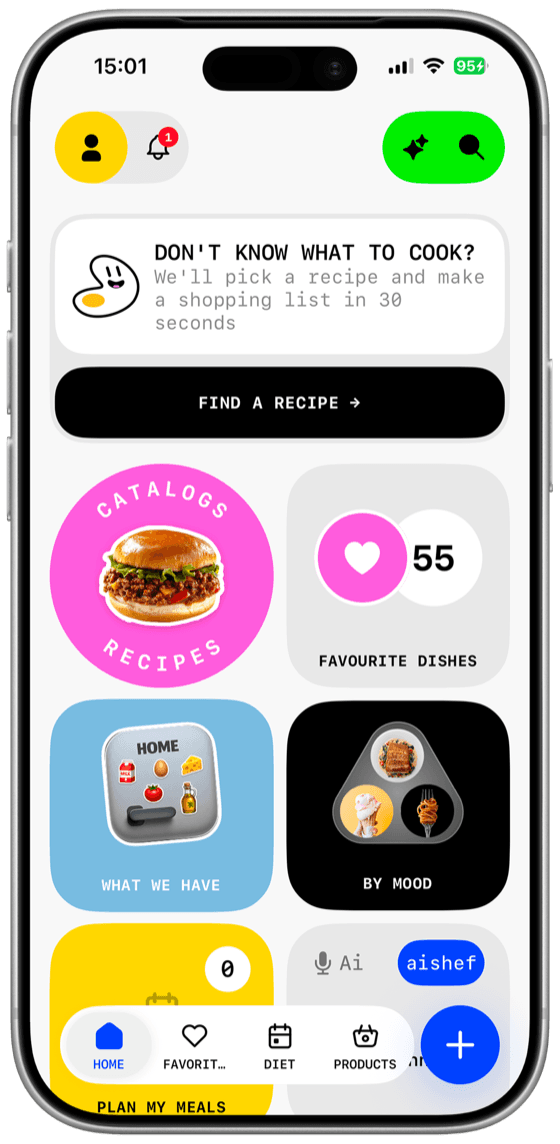
If you have rice, eggs, chicken, vegetables, or leftover cheese at home, the problem is not a lack of food. The problem is turning those items into a decision. Dishday helps you start with what you have, find a practical meal idea, save it, and add only the missing items to your grocery list.
Meal ideas
Generic recipe search often starts too wide. You find beautiful dishes, but half the ingredients are missing. Dishday starts from the other side: food already at home, available time, preferences, and what you actually want to eat.
That makes it easier to use leftovers, avoid unnecessary shopping, and stop delaying dinner because one ingredient is missing.
Planning
A good dinner idea should not remain a one-time note. When a dish works, save it, place it on a day, and connect it with groceries.
For example, if you already have rice and vegetables, Dishday can help you choose a dinner direction and show what might be missing: chicken, eggs, sauce, or herbs.
Example
Say you have rice, eggs, a little chicken, carrots, and yogurt. Instead of opening ten websites, start from those ingredients.
Chicken vegetable rice, a leftovers omelet, or a simple bake become realistic options.
Check whether the idea fits your time, ingredients, equipment, and preferences.
Save the meal, add it to the week, and buy only what is missing.
Who it is for
Use leftovers and pantry items before they are forgotten.
Start with what is already at home and choose dinner faster.
Review food at home before adding more to the grocery list.
Turn kitchen-based ideas into meals in your plan.
Features
Add fridge, freezer, or pantry items.
Use ingredients as the starting point for choosing a dish.
Describe ingredients, time, and restrictions to get a meal direction.
Save a useful idea as a recipe card.
Place the meal on a specific day and meal slot.
Add only the items missing from the meal.
Three steps
Enter the main foods from your fridge, freezer, or pantry.
Compare ideas by time, difficulty, and whether you actually want to eat them.
Move the recipe into your library, weekly plan, or grocery list.
Important
Dishday helps with ideas and organization, but you must check expiration dates, smell, appearance, allergens, cooking temperature, and food safety before cooking.
Questions and answers
Start with 3–6 main items: a grain or pasta, a protein, vegetables, dairy, sauce, or spices. Dishday helps turn that set into a meal direction.
Yes, if the food is fresh and safe. Leftovers can become dinner, breakfast, or lunch for the next day.
Dishday helps generate or organize ideas, but you make the final choice and ingredient checks.
Yes. When a meal idea works, missing ingredients can support your grocery list.
No. The main workflow is broader: food at home, pantry items, leftovers, meal planning, and groceries. A camera can help, but the useful part is the connection to recipes and the weekly plan.
Yes. A meal idea from ingredients at home can be saved and placed into your weekly plan.
Dishday
Add ingredients, choose a practical idea, save the recipe, and buy only what is missing.